
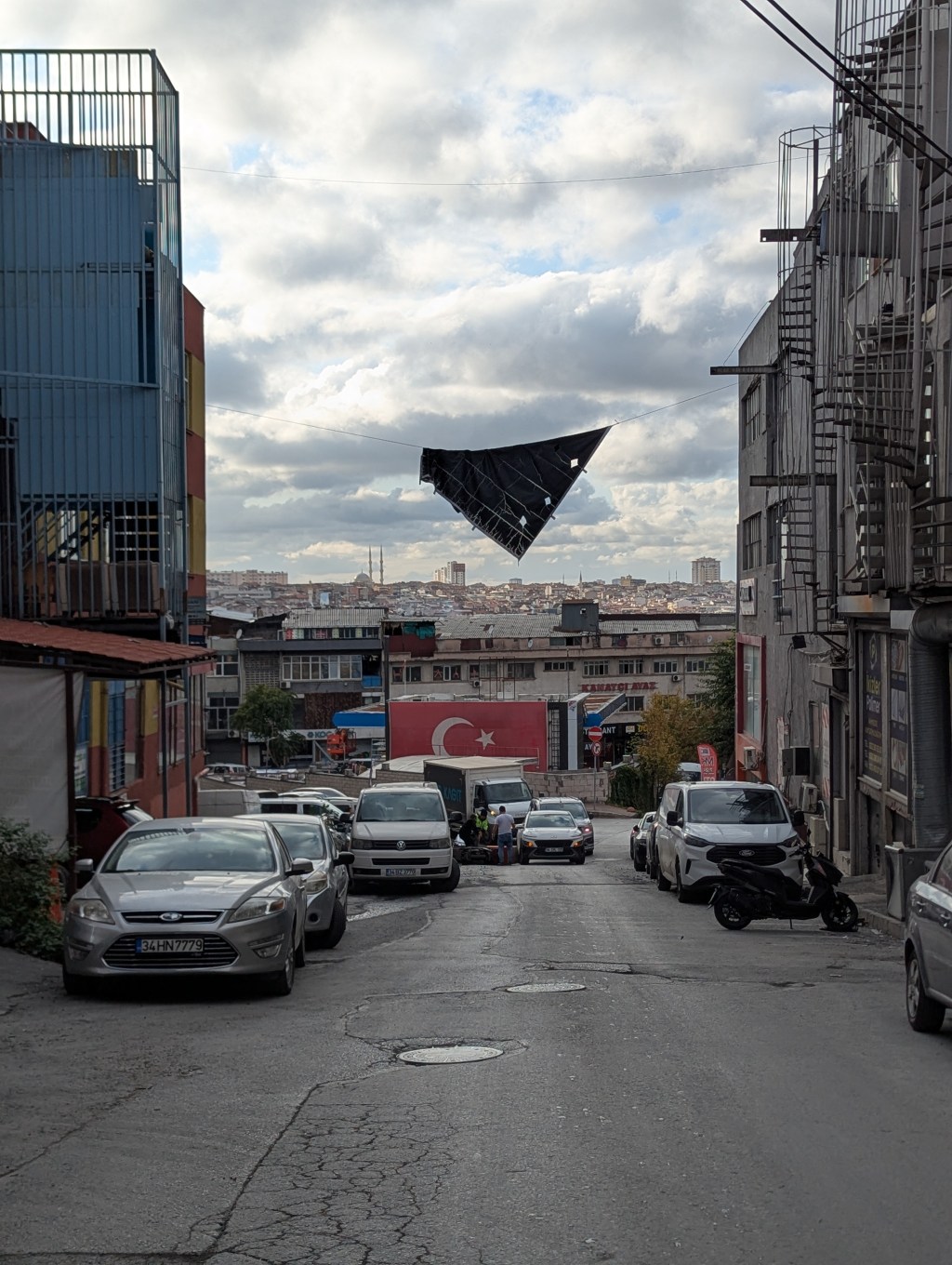
Whilst I was travelling through Turkey, a three-part podcast was released called Boy Wasted, investigating the death of a young Afghan refugee in an Istanbul recycling facility and the murky underworld of Turkey’s import-driven plastics recycling industry. It has for several years struck me as odd that Turkey has become such a major destination for our Great British Plastic Waste – so in a brief diversion from the main blog, I decided to venture off the beaten track and see some of this mysterious world with my own eyes.
————————
I’m going to go out on a limb and guess that you have never heard of Vatan. It is quite a small neighborhood in Istanbul’s Bayrampaşa district, around a 45 minute bus ride out from the bustling spice bazaars and grand mosques of central Istanbul on the European side of the Bosporus.
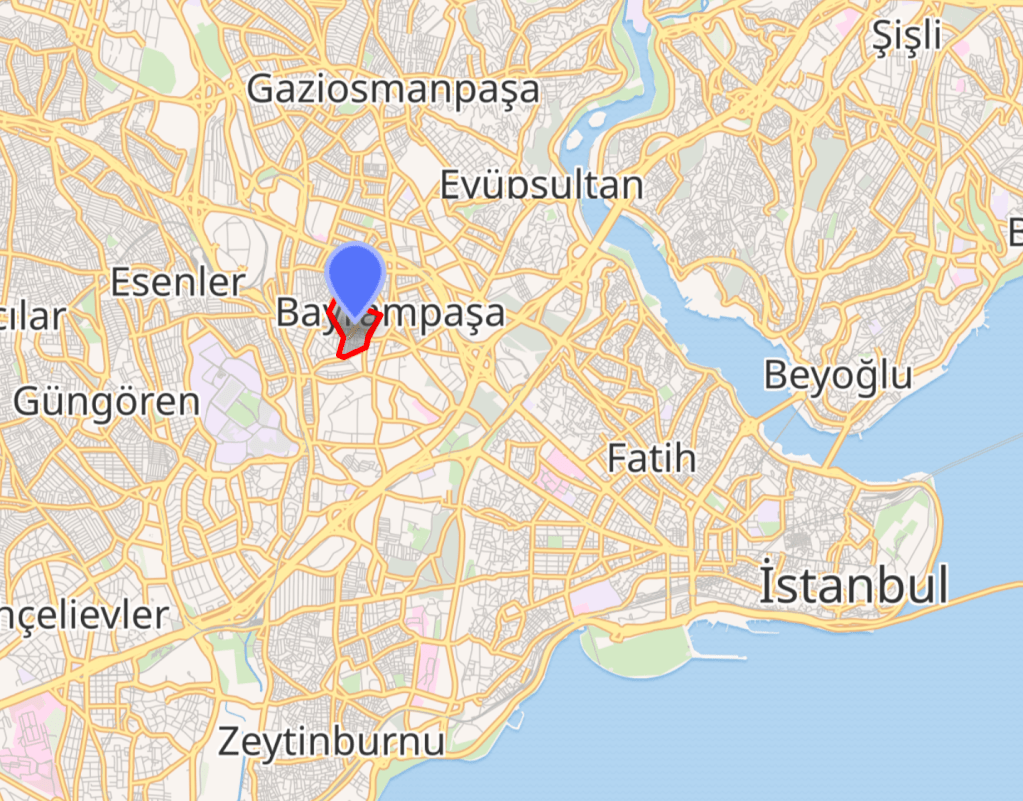
Vatan is unlikely to feature in any Top 10 Istanbul Must See travel blogs or be pictured on a box of Turkish delight. The closest most tourists will get is the city’s main bus station, around a kilometre up the road at Esenler. That’s because Vatan is very much one of Istanbul’s inner city industrial neighborhoods.
Something in the air
Back when I was 12 years old, my friends and I would often walk through parks and green spaces in my home town of Billingham, northeast England. Every now and then we’d spot a ‘parachute’ on the floor – nothing to do with skydiving, these were two litre plastic bottles with the base cut off and a carrier bag attached in its place. I was told they were an elaborate form of glue sniffing: pour your adhesive of choice into the device then huff on the mouthpiece until the VOCs and oxygen deprivation deliver the desired buzz. I can’t tell you exactly what it’s like to parachute because I’ve never taken the leap, but just breathing the air in Vatan might not be too far off…the head rush comes on within seconds of stepping off the bus.
It’s not the smell of glue that fills the air on the streets of Vatan, but the heady aroma of molten plastic. The neighbourhood is a hub of small-scale industrial operations – especially plastic recyclers and manufacturers (along with an abundance of car repair garages).
In the Boy Wasted podcast, their investigations focused on Cebeci – another industrial district on the northwestern outskirts of Istanbul, another recycling hub where Arifullah Fazli’s body was discovered. As well as being on the edge of town, Cebeci has good links to the motorway, making it an ideal destination for imported plastic waste brought in by the truckload.
Vatan is a fair bit closer to the city centre than Cebeci, where its narrow streets make it less suited to the large trucks that tend to bring in unsorted waste from the ports. Instead, Vatan seems to be where the plastic waste ends up once it has been sorted by polymer and colour – a labour intensive process that becomes more economically viable when costs like salaries, health & safety, and environmental controls can be kept to a minimum. Its inner city location also makes Vatan a more convenient delivery point for the so-called ‘informal’ sector: men who push trolleys full of items fished out of bins to be sold on the recycling market.

Into the alleyways
Turning off the main road and down the grubby side streets of Vatan, traces of waste management began to emerge. The same men I had seen rummaging through the city’s bins for items of secondary value were now emptying their trolleys down grime coated alleyways into decrepit industrial units. Tipping the collected material is a two person job; I watch a grown man scold his juvenile accomplice as he fumbles and drops his end of the awkward load.
It’s not just plastic bottles pulled out of litter bins coming through the factory doors. A young man in a red hoodie yells to the driver of a small truck as he starts to unload his vehicle. The truck is piled high with smashed up black plastic fruit crates, a mass of splintered polymer that had begun to clog the building’s input chute. You have to watch out for these chutes along the alleyways: without due care & attention, you might find yourself plunging uninvited into a waste reception hall.
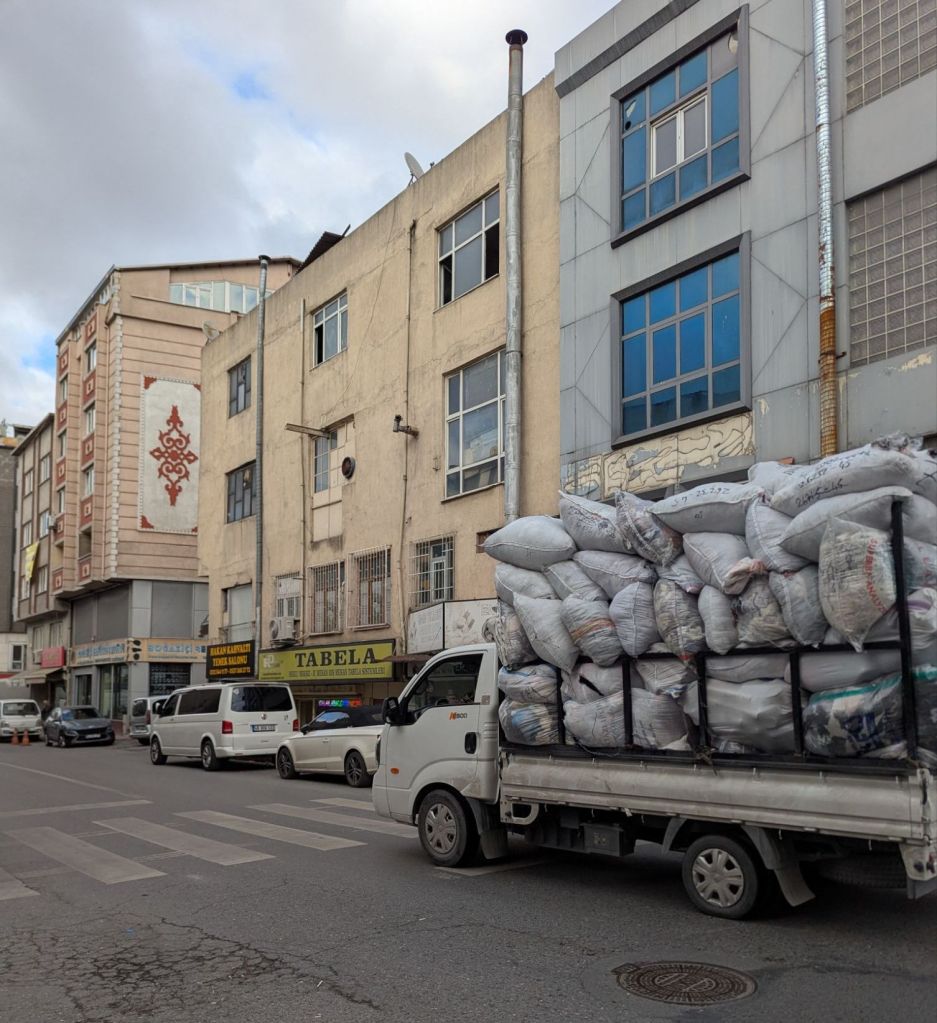
A small truck whizzes past down the main road that meanders through the centre of Vatan, its load stacked precariously high with bulging white sacks. The contents look relatively soft and pliable, and I wonder if it might be sorted plastics coming out of the plants at Cebeci, but it’s impossible to tell as a passive bystander.
Just off the high street, a pile of black bin bags lay on the floor next to a large bin. They’ve been stuffed with partially molten shoebox-sized blocks of black plastic, seemingly rejected midway into the melting process for some reason. Up another street, there’s a smorgasbord of dumped rubbish strewn beside a wall: everything from plastic bags, bottles, pots tubs & trays, even a Fiat car bumper thrown in for good measure. The floor is covered in thousands of small, multicoloured fragments of plastic – something you see all around once you get your eye in, although not usually quite this bad. A shallow stream of water flows onto the street from a nearby garage, carrying the smaller fragments along with it.

Plastic that enters these facilities and passes the initial quality check is put through a sequence of processes to grind, decontaminate and refine the material into granules, which is sorted by colour and polymer type then sold to manufacturers. One of the local outfits was making everything from door knobs to dining room tables although they seemed to specialise in trolley wheels…the principal mode of transport for local recycling collections.
Local impacts, global dilemma
It is an unfortunate truth that pretty much everywhere you go, people drop all kinds of litter and dump all sorts of rubbish. Glass bottles, metal cans, sheep carcasses – almost every waste under the sun can be spotted at the roadside from time to time. However, it is plastic that consistently gives the impression of getting absolutely everywhere (..even before you consider micro-plastics). It is a remarkably useful, versatile but also complex group of materials, and one that eludes meaningful levels of recycling whilst continuing to infiltrate the natural and agricultural systems we rely on, where the long term ecological and health impacts remain poorly understood.
Developed countries with relatively effective recycling infrastructure for other materials have relied on exporting waste plastic to parts of the world where health, safety and environmental standards consistently fall short of what the exporting companies (and their clients, including local authorities) would rightfully expect in their own domestic operations. As is often the case with waste management, the burden on importing countries is levied disproportionately onto the poor: the people who work in and live beside waste facilities. In Turkey this is often the refugee population.
It’s hard to overestimate the significance of Turkey when it comes to migration. As the geographic gateway between Europe and the Middle East along with the civil war in neighbouring Syria, Turkey has become the world’s second largest host nation for refugees. Although the majority of Turkey’s c.3 million refugees are from neighbouring Syria, anecdotally it seems that Afghans – a recent target of Turkish authorities for deportation – are over represented on waste sites.
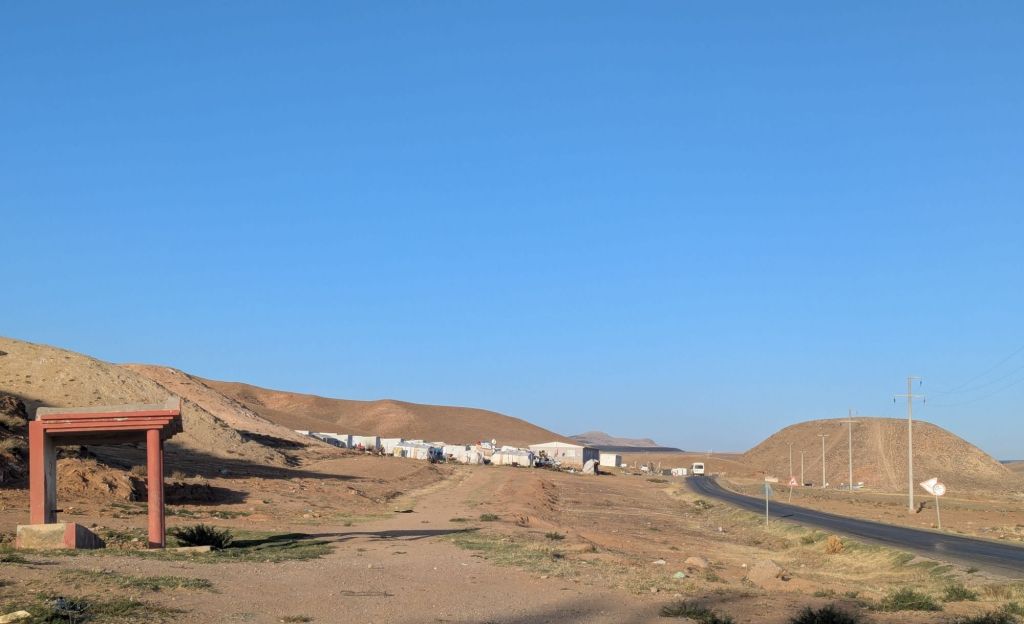
The UK has been a long established exporter of plastic waste, even leading the world in sending material to Turkey in 2023, but it’s not the only one. Over half of the EU’s waste has been exported to Turkey since 2018 after China decided it’d had enough of being the world’s dumping ground and closed its doors to waste imports. When it comes to plastic recycling, domestic markets tend to skim off the cream, leaving the bulk to export markets. Exports go to where the market dictates – and whilst energy costs play their part – for mixtures of materials that require manual sorting there’s a ‘race to the bottom‘ effect where material flows to whoever can get away with the cheapest labour, worst health & safety, and least environmental controls. Vietnam, Malaysia and Indonesia have also become major importers in recent years.
This is far from an easy problem to solve. People can reduce their plastic use here and there, but consumers will never solve this on their own, especially where plastic alternatives are either hopelessly sub-par quality or prohibitively expensive. The 2025 United Nations negotiations to agree a global treaty to reduce plastic pollution failed because countries couldn’t agree whether to reduce virgin plastic production or instead focus on improving recycling, with oil producing nations being less enthusiastic about the proposals that require producing less oil [insert ‘surprised Pikachu face‘].
If humanity can’t bring itself to cut down on plastic production and consumption, then bringing an end to waste plastic exports and taking ownership of waste generated in our own countries seems like a reasonable alternative in the meantime. Whether we will be able to recycle that waste or not is another question.


 The Cycling Brit
Leave a comment