
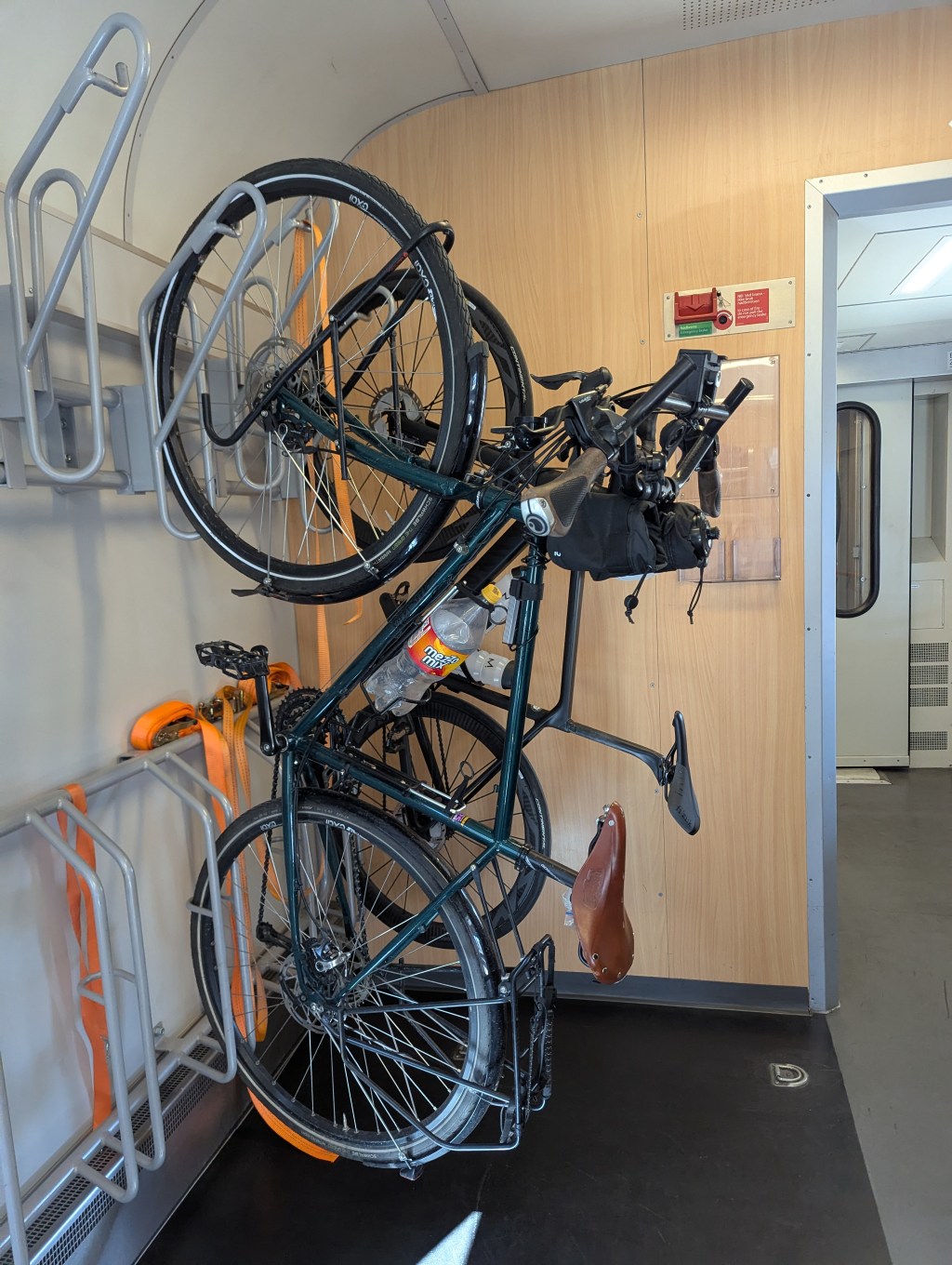
The challenge that lay before me now was no longer one of physical endurance, but of logistics. My goal was to get to the west coast of Norway and begin riding again through the fjords, but having turned east to head further into Denmark I was diverted from my original plan to take the ferry from Hirtshals to Stavanger. I needed another way.
With my train ticket for the first leg already purchased – Nyborg to Copenhagen – I needed to work out the most hassle-free option to get up to Norway without paying through the nose.
Turns out the ferry prices are little spicy from Copenhagen compared to Hirtshals, so they got ditched first. The train is cheap-ish if you get an advance ticket, but frustratingly there were no direct trains to Oslo, and I had no appetite for making a connection, so they joined the ferry on the scrap heap. The Flixbus will take you from Copenhagen to Oslo in one go and is the cheapest fare, but also has the disadvantage of being a bus. Flixbus is a bit like Megabus in the UK, cheap and cheerful, except they do usually come equipped with a bicycle rack on the back which is a big plus: no need to dismantle your bike to make it fit in the luggage hold (praying it comes out again undamaged). So Flixbus it would be.
Bizarrely I almost abandoned Flixbus altogether after ballsing up the booking process and falsely believing there were no bike slots left. But I was mistaken, there was actually one left – a nine hour Sunday night bus from Copenhagen to Oslo via Gothenburg, departing at 23:50.
With the most complicated international leg sorted, I could focus on the immediate task of catching my intercity Danish train from Nyborg to Copenhagen, where I would enjoy a few days of rest. The station wasn’t far from my shelter, so without a tent to pack away for once I had a bit of spare time on my hands, enough to treat the bike to a much needed deep clean.
People often ask me “What will you do with all your spare time?”, and I did wonder this myself before starting the trip; for a while I genuinely contemplated bringing a laptop to produce music along the way. I suppose if I wasn’t blogging there would be a bit more free time, but there’s something satisfying about trying to capture the experience in some way, shape or form, and for me it is the blog. So I’ve come to appreciate those peaceful interludes between the travel, daily chores and blog writing: you can pick up a less pressing matter like bicycle beautification, or simply sit on your bum and do nothing. No stocktake of the pannier pantry or planning where to go and how to get there, just empty your mind, and do nothing.

How to board a train: the stressful way
I got to Nyborg railway station with plenty of time to spare, so I took the opportunity to have a quick google about taking your bicycle on trains in Denmark. I came across this useful summary on cycletourer.co.uk, which to my horror warned me of the obscenely high triple-step between carriage floor and the platform edge on intercity DSB trains. I know the bike can tackle two steps fully loaded, but three would almost certainly be too steep, too awkward – I would have to remove the panniers and bring everything onboard in two trips.
Poised on the platform ready to pick up my bike as soon as the train doors opened, my heartbeat began to accelerate with anticipation. The train arrived and passengers began to pour out of the doors and into my way. Swimming against the current I poked the front wheel between busy looking Danes and got to the door where I picked up the bike and carried it up the three stairs. Now onboard I began to scan the carriage for my reserved spot, only to discover that DSB have a system of sharing the bicycle storage with fold down chairs where people without seat reservations can sit down if the space is free. A girl in her early teens was sat in my spot – headphones in, eyes glued to the infinite deck of TikToks and Instagram reels in front of her – but this was not the time to play train manager, so I dumped the bike in a corner and got off to collect my panniers.
“PEEEEEEP!”
That was not the sound I wanted to hear. My assortment of bags was piled in a heap around 10 metres from the train door, so a 20 metre round, and the conductor had just blown her whistle. I knew it would be physically impossible to collect all bags and make it on in time, so I grabbed two and ran for the door. Two ladies on the platform were alert to my dilemma and heroically grabbed the remaining bags.
Now you’re not supposed to obstruct closing train doors, partly because you could get trapped if the sensors fail but mainly because if everyone did this all the time the trains would be even later than they already are, but with few cards left to play I lunged forward with my rack pack to try and jam the rapidly closing door in the hope it would reopen and buy me some time at the expense of every one else’s. It was futile, the door closed. There was only one thing left to do:
“MY BIKE IS ON THE TRAIN!!!”
The conductor responded in Danish which one of my new found fairy godmothers translated:
“She’s holding the train, go to her door, GO!”
The ordeal was over as quickly as it started, and the conductor barely acknowledged the drama. Maybe it was a daily occurrence.
There were two main lessons learned. One is that there is always a potential complexity in placing the bicycle into its designated spot on the carriage, faff that is best dealt with once the train is moving. Much better to dump your bags onboard first then immediately get off and grab the bike – you can fine tune what goes where once everything is on board.
The second lesson is that generally speaking, people are quite kind and willing to help those in need. The two women who came to the rescue in my hour of need would almost certainly have been just as willing to help if I had approached them before the train arrived and asked if they could help carry on a few bags for me. If you think you can’t do something on your own, recruit your passenger assist in advance, or you might just end up waving goodbye to half your belongings.
Copenhagen
Getting off the train at Copenhagen Central station went a bit more smoothly, I’m glad to say. Although I was keen to have a look around the rain was quite heavy and I wanted to get settled at my campsite 8km north of the city centre.
I’ve never camped so close to a major city before and wondered if I would feel secure leaving gear in the tent whilst out and about. As it happens the site was that of a defensive fort from the early 20th century – surrounded by a moat with monitored entrances. Quite unusual, and hard to imagine a more secure setup, putting my mind at ease.

Copenhagen is clean, has top notch cycling infrastructure, and the parts I visited felt safe even at night. There are some quite unusual areas too, such as the ‘Meat Packing District’ (once filled with abattoirs and meat processors, now filled with artsy looking businesses, bars and restaurants) and Freetown Christiana (an ex military base turned commune, which I only saw the fringes of unfortunately). It can be really pricey though; I tend to use cappuccinos as my international cost-of-living benchmark and they rarely came in south of £5 a pop in Copenhagen.
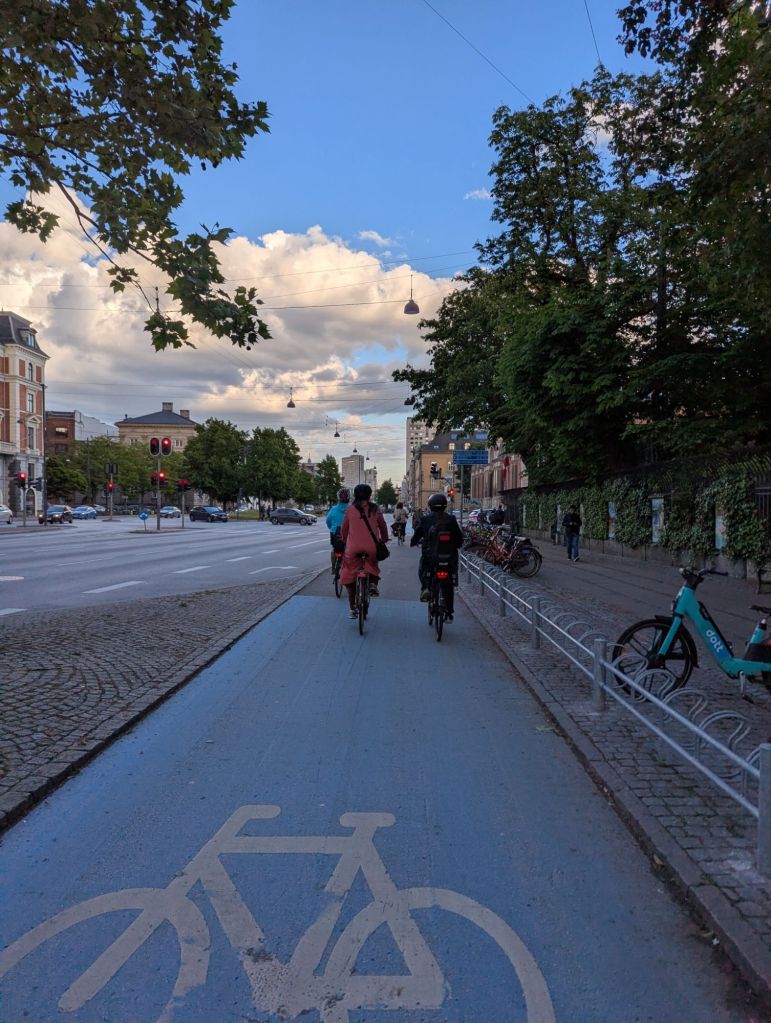
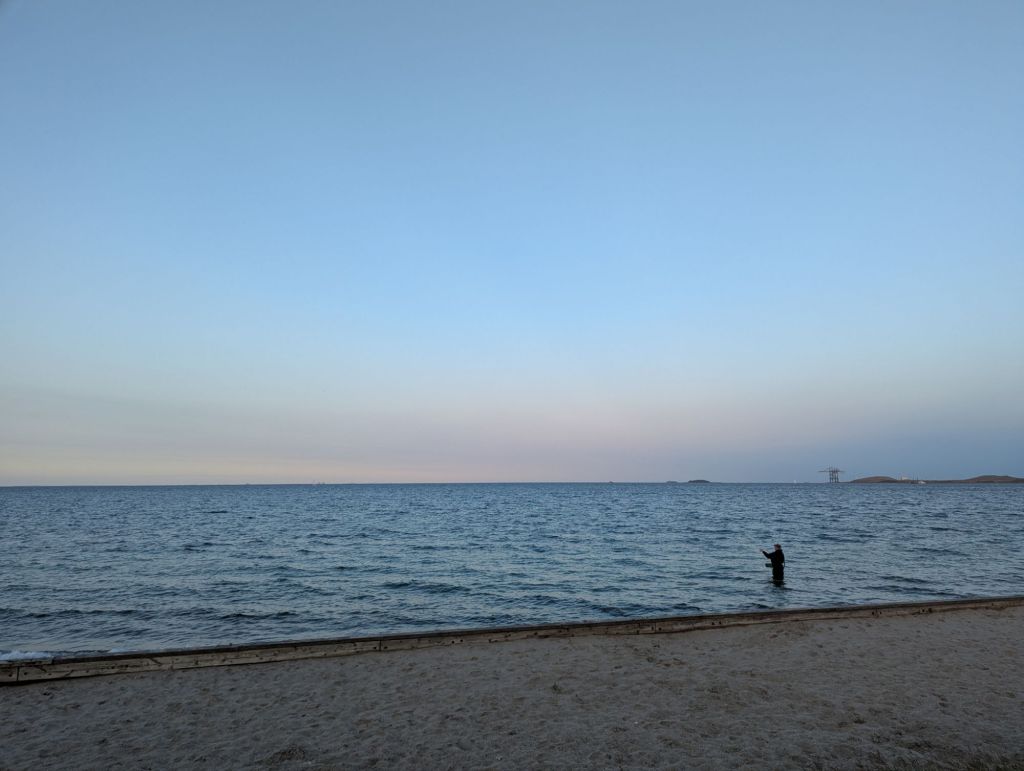
I won’t go into great detail of all the touristy things I got up to in my downtime, so have a few photos instead:
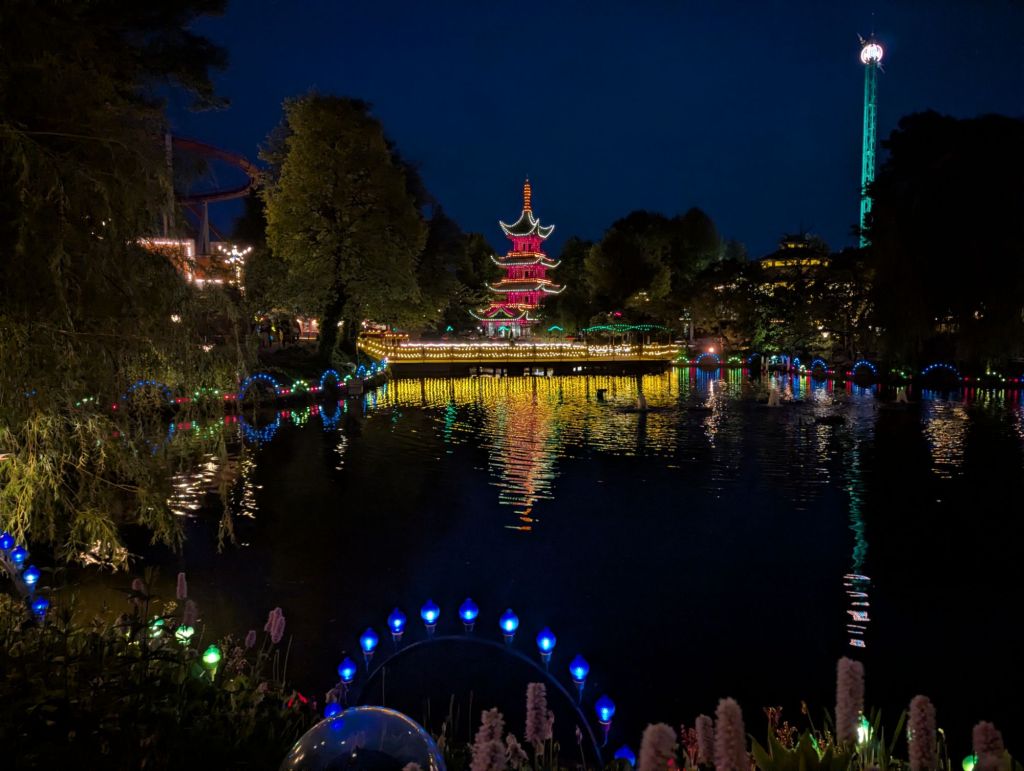
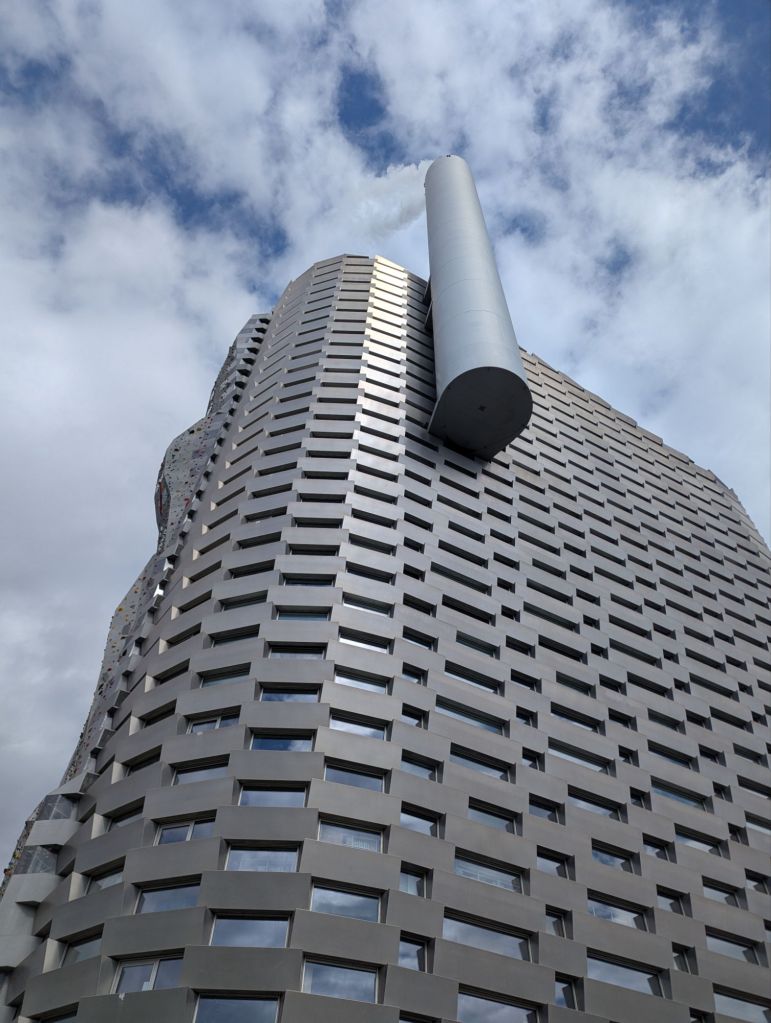
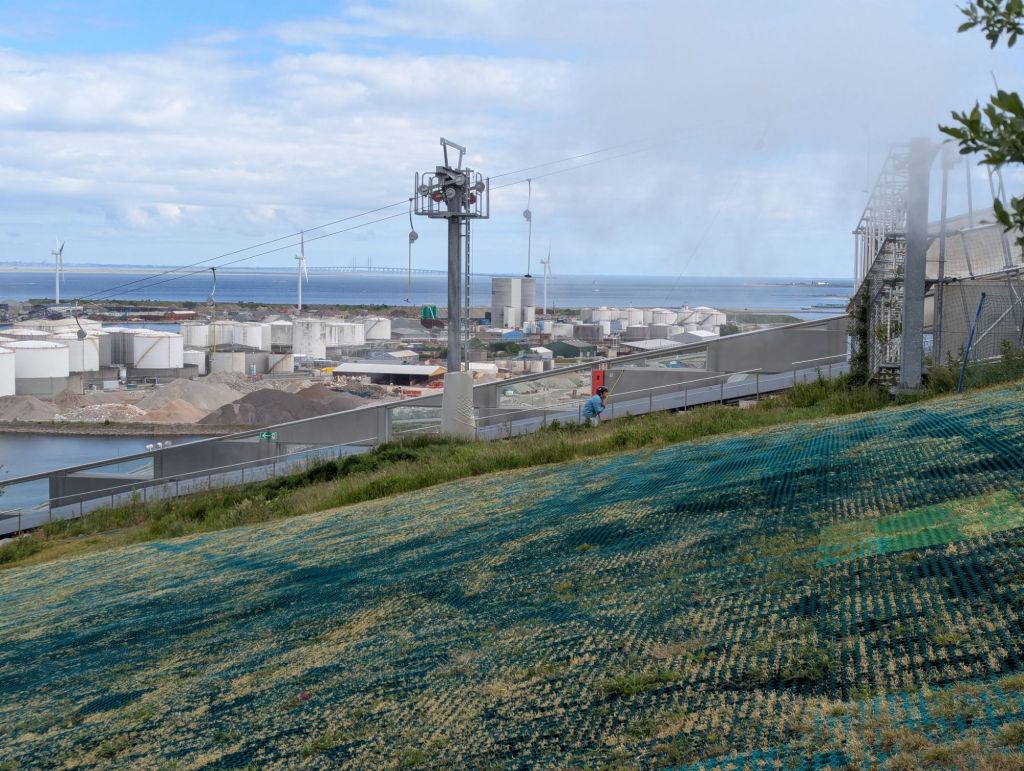
Any city that can turn the municipal residual waste treatment facility into a popular tourist attraction must have something going for it, even if it did cost $670m to build. Having worked in the waste industry I can confirm that’s quite pricey, even more than a cappuccino.
Bus to Oslo
The scheduled 23:50 Flixbus departure gave me plenty of time in the day to gee myself up for the 9-hour journey. At least the boarding was pain-free, just flash your ticket and one of the drivers takes your bike and secures it to the rack. Just remember to take off your water bottles to avoid unwanted ejections onto a motorway.
The main challenge was hand luggage. I walked on with my big rear rack bag and handlebar bag, neither of which could fit in the paper-thin overhead shelf. The smaller bag just about squeezed under the chair, but the bigger one could fit nowhere except the empty seat next to me – I held my breath and prayed that nobody would sit there whilst the coach slowly filled up: they didn’t. Looking back I don’t know why I didn’t just ask the driver to pop it in the hold, oh well.
The journey was peaceful enough, but sleep was difficult especially at stops, and being trapped in a chair didn’t help. The chairs recline a little but it doesn’t get much more comfortable. I arrived bleary eyed at Oslo bus station just after 9am, and headed straight for my hostel.
Oslo
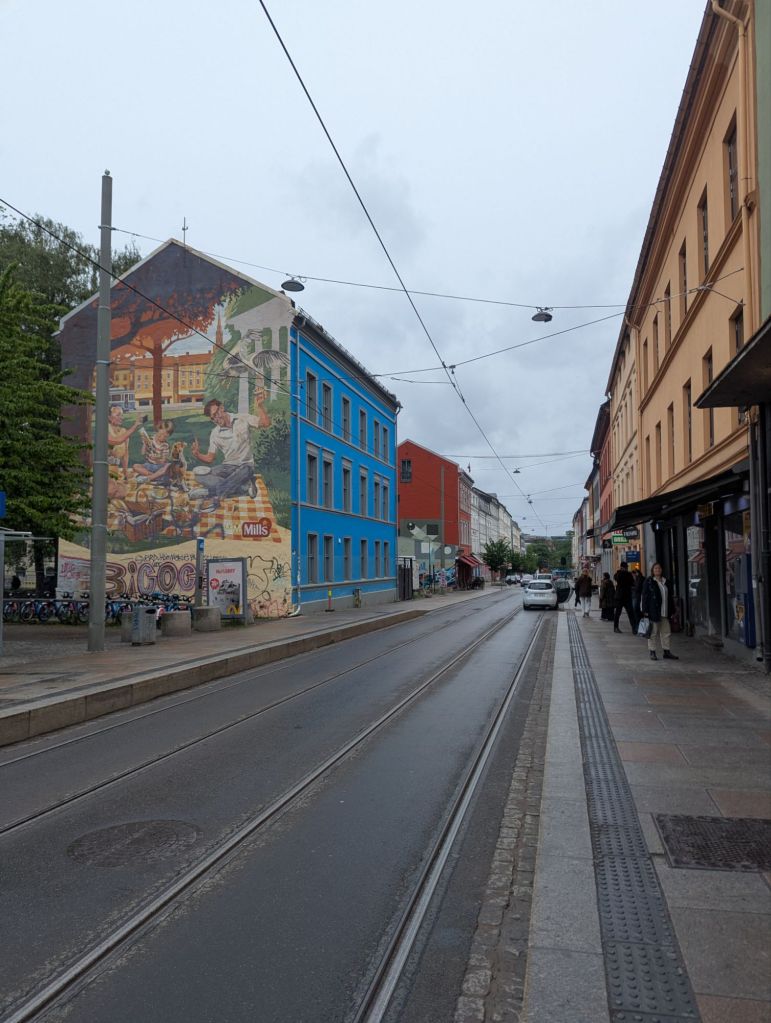
I had two nights booked at the Bunks at Rode hostel, a few tram stops out from the city centre. Oslo is pretty small by European capital standards, but it also tends to be raining, so I found the trams to be quite handy.
In true Norwegian fashion the city sits at the top of a fjord and the harbour serves as the focal point of the city. There does seem to be a lot of construction and renovation work going on at the moment, and a lot of buildings look very 1980s in style, presumably relics from the oil boom that has continued to benefit Norwegian public finances so well.

Interestingly the cappuccinos were coming in less than in Copenhagen (c.£4), but this is where the coffee-centric inflation index falls over, because make no mistake: Oslo eats your money. On two different occasions I was caught short and had to use public toilets where I was duly charged 20 Kr. That’s £1.50, for a wee! The standard price of a 0.5 litre beer is 110 Kr which works out at around £9 a pint, and even a small can of non alcoholic lager is over £5…looks like I’ll be keeping away from the pubs, which is a shame because they are good for writing in.
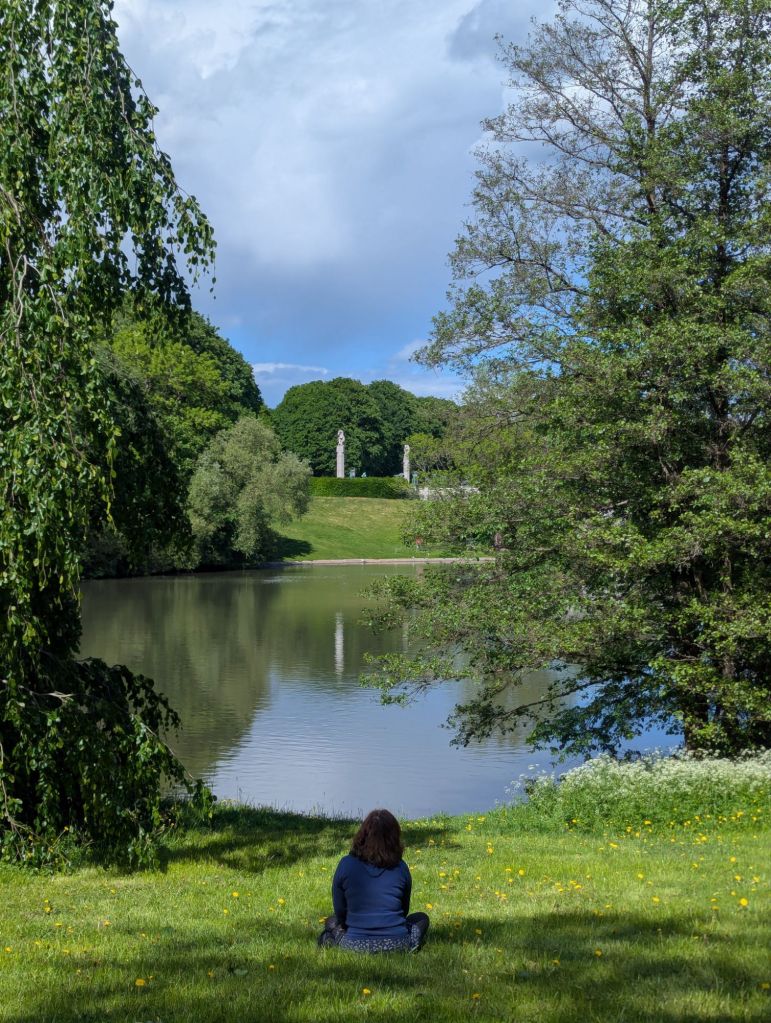
Although still feeling lightly toasted from sleep deprivation I scooped myself up to have a look around the National Museum of Norway on the afternoon of my arrival. Feeling more refreshed, the next day took a tram west to Frogner Park where the bronze statues of Gustav Vigeland shun the great and the good to instead depict quite ordinary looking folk having a good time frolicking in the nude. There’s a Munch museum too, but I settled for the single room dedicated to his work in the national museum (which has the original ‘Scream’).

The mountain train
I had been aware of the railway between Oslo and Bergen before this cycle tour. Between Norway’s capital and second city lies some pretty substantial mountains, and whilst there are many tunnels through the steeper sections the tracks still rise to a dizzying altitude.
I booked the late morning train plus a reservation for my bike. Unlike in Nyborg the train would be starting in Oslo, which I hoped would buy me some more time to get on and off. Either way I was stood at the platform ready to pick up all six panniers in one fell swoop and swiftly return for my bike.
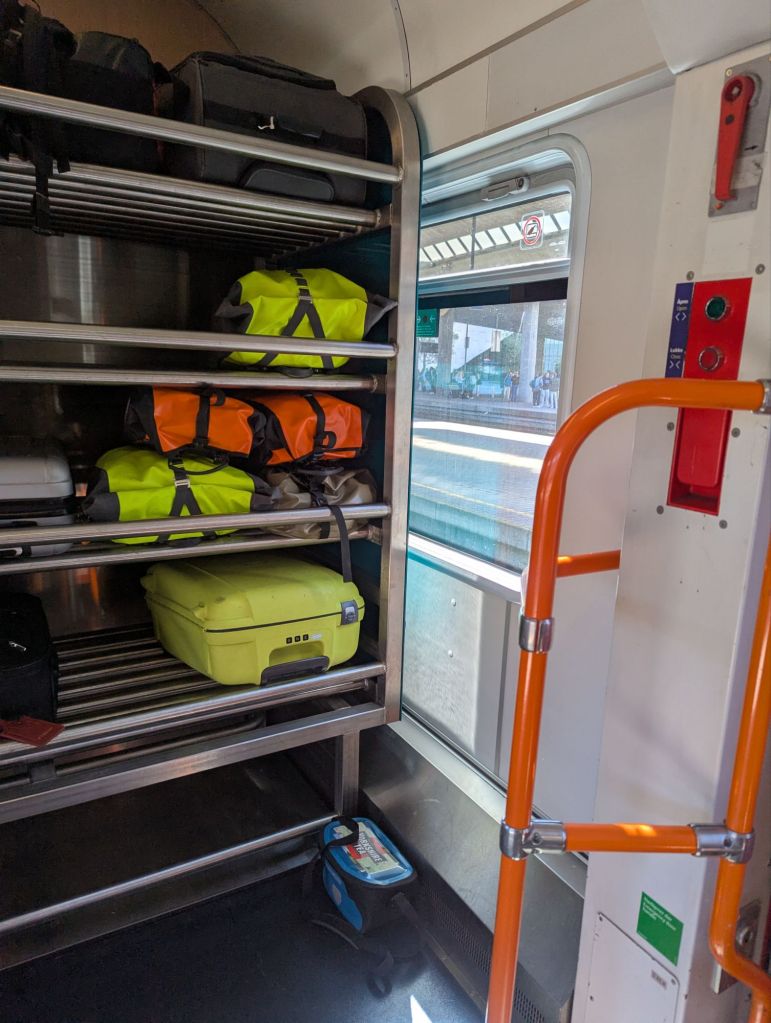
I needn’t have worried. Not only was there plenty of time to board in Oslo but it seemed to be similarly generous at other stations along the way, with passengers often hopping off for a quick vape safe in the knowledge they had time to play with. The bike racks were vertical and there were a lot of them, with a stack of shelves in the bicycle storage car ideally placed to put your panniers. By far the best bicycle-on-train experience I’ve had on an intercity line, top marks!
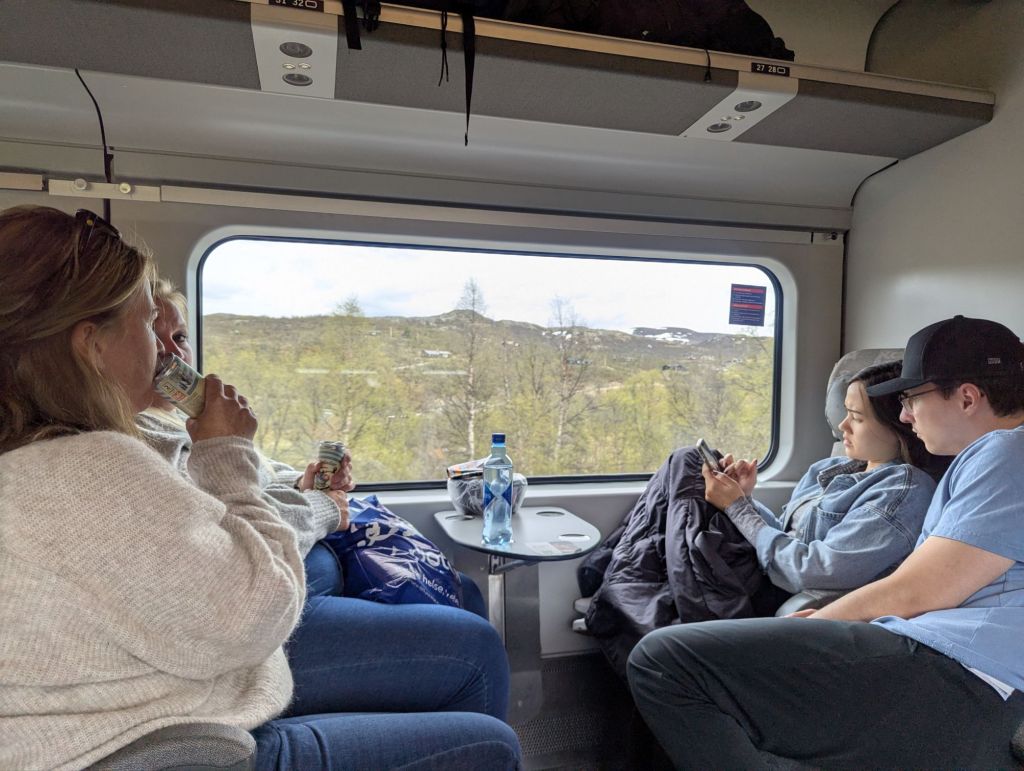
The train seems to start climbing as soon as you leave Oslo, and it’s not long before you’re chugging along through deep forests and along the shores of glistening lakes. Around 3 hours in we rose above the snowline and the driver mentioned a glacier was visible on our left, before stopping at the snow covered station of Finse at over 1,200m; this really is quite something, I bet Michael Portillo would love this…oh, he did (UK only, I’m afraid).
My ticket did not reach as far as Bergen though, I wanted to get off earlier and ride through some of the mountains before encountering yet another city. After discounting the stops at seriously high altitude I opted for the small town of Voss, of which I knew basically nothing.
Having descended into Voss on Ascension Day – a public holiday in Norway – every shop was closed except a small kiosk, where I stocked up on overpriced snacks and bought a copy of the local rag to see what was going down in greater Bergen.
It was overcast, a bit cold, and I was surrounded by mountains on all sides. I’d spotted on the map a campsite just down the road, but this is Norway, and for the first time on my trip it was now completely legal to wild camp. The tour was about to get turned up a notch.
—————————-
PHOTOGRAPHY: Copenhagen and Oslo
—————————-
BONUS CHAPTER
I was going to include the section below in the Danish shelter post, but it got the chop to reduce word count, so I’ll just drop this here for an added bit of Viking goodness.
The Vikings of Ribe
If you went to school in northern England anywhere near York, you might remember that school trip to the multi-sensory experience that is Jorvik Viking Centre. You climb into a repurposed rollercoaster carriage and meander your way back in time through various aspects of Viking life, with robotic Viking mannequins occasionally turning their head or lifting an arm. It’s good!
The Danish town of Ribe has its own Viking centre, but this one is outdoors. They have painstakingly rebuilt an entire Viking village using traditional materials and methods, and for a few months a year they have a team of experimental archaeologists living on-site as Vikings. I’m guessing they are allowed to go to the 21st century hospital if there is an accident in the wood whittling workshop, but they really do bring the place to life. I got chatting to a couple of women sat beside the large window of the main lodging, a dog was snoozing beneath the table and the open hearth was filling the room with the sort of heady aroma you might expect when your fireplace doesn’t have a chimney.

Next to the church is a pool where they have decked out a wooden jetty, where even the ‘nails’ holding the thing together have been carved out of wood. It looks like the sort of thing you don’t let museum visitors walk on top of, but this is a hands on sort of place so you have free roam.

Whilst I was enlightening myself about the daily lives of Ribe’s viking ancestors my powerbank was being steadily charged up by one of the E-bike charging stations installed in the car park, I just plug it in, pop the charger in my lockable handlebar bag and everything is secure…quite a neat little setup if you plan to stop for a few hours.


 The Cycling Brit
Leave a reply to softlybbc8d8cbad Cancel reply