
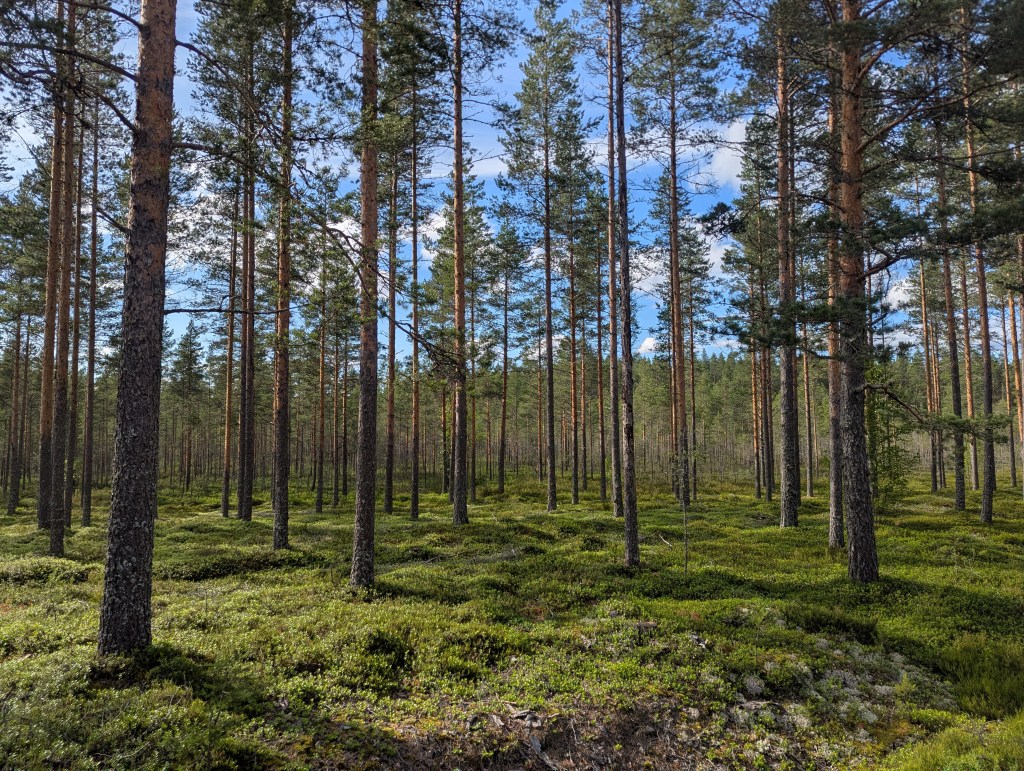
I was about to enter my final Nordic country of the tour, but unlike in Denmark where I felt as free as a bird to hang around the nice places, take long diversions, and generally not give time a second thought, that luxury was now a thing of the past. Any time spent straying from the planned route would have to be done sparingly, and an opportunity to do so arose before I even reached the shores of Finland.
The Moomins of Bergö
Getting up at 5am after four hours sleep doesn’t really come naturally to me. Having arrived at Umeå ferry terminal ridiculously early I was first in line when the check in attendant arrived for her morning shift. Her name was Maja and, little did I know at the time, she would change the course of my journey through an act of kindness.
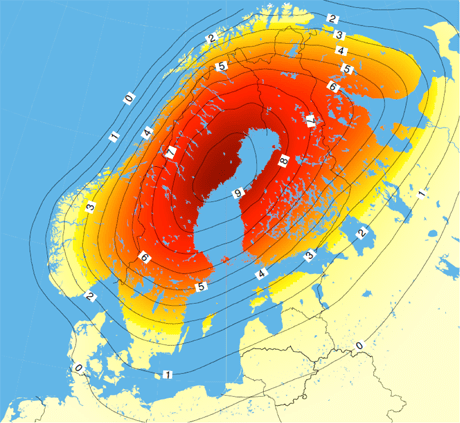
I’m going to put my hand up here and confess: before this trip I had no idea there was a significant Swedish speaking community in the west of Finland. The main hub of this community is the autonomous region of Åland which forms a large part of the archipelago between south-west Finland and Sweden – although I had no idea they were speaking Swedish there, I did studying this area on Google Maps before the trip and the incredible mosaic of islands and islets in their thousands. The land here is emerging from the sea as the earth’s crust continues to ‘rebound’ ever since the enormously heavy ice sheets and glaciers which covered the region melted away.
There is another cluster of Swedish-speaking islands around the central city of Vaasa – where I would arrive in Finland by ferry – and it is around here that Maja recommended I should visit: the island of Bergö. What surprised me was the instruction that any visit should include calling by her parents’ house for a cup of coffee. It was pretty much the opposite direction from my original route, and of course the clock was ticking on my 90 day visa, but this was a unique proposition.
Our exchange took place in the time it took for the kiosk computer to load, and with a few mouse clicks I was checked in and heading for Finland. I sat in the ferry’s dining room eating a bowl of jam with a splash of porridge [sic] looking out over the Gulf of Bothnia, around 85% certain our conversation had actually just occurred and was not the fabrication of a sleep deprived mind.
Maja had warned me about an incoming storm. I initially shrugged it off as just another dose of wet riding to deal with, but after seeing sheets of rain on the morning I was due to leave my I rapidly negotiated another night’s stay at my B&B and waited this one out. Besides, surely it would be better to see Bergö in the sun.
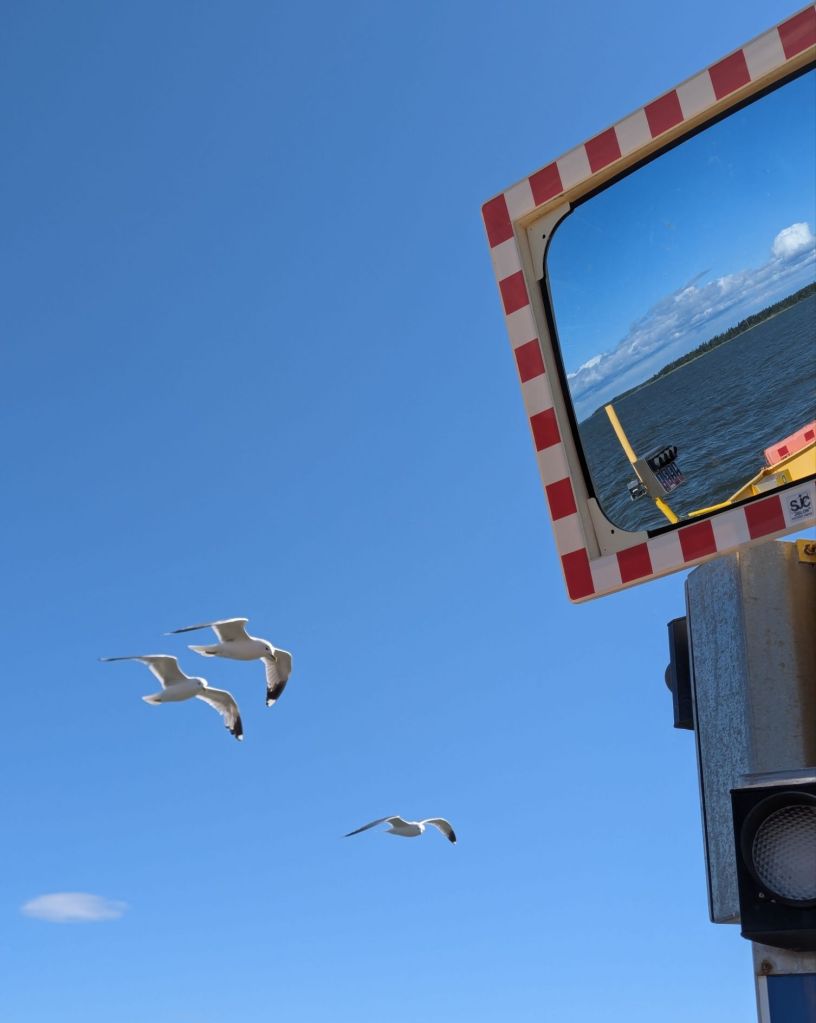
The ferry to Bergö was by far the smallest of the dozens I had taken so far, and by the look of it maybe the oldest too. I wondered what the pursuing seagulls were anticipating, maybe the odd invertebrate propelled to the surface amongst the turbulence, or were they just hoping I might toss them a crisp? Upon arrival at the southern end of the island there is a single road that leads into the centre of the c.500 strong community. Maybe it was the strong afternoon sun light, or just in contrast with a flawless blue sky, but the trees seemed to be more vividly green here. I followed the road and headed for the centre.
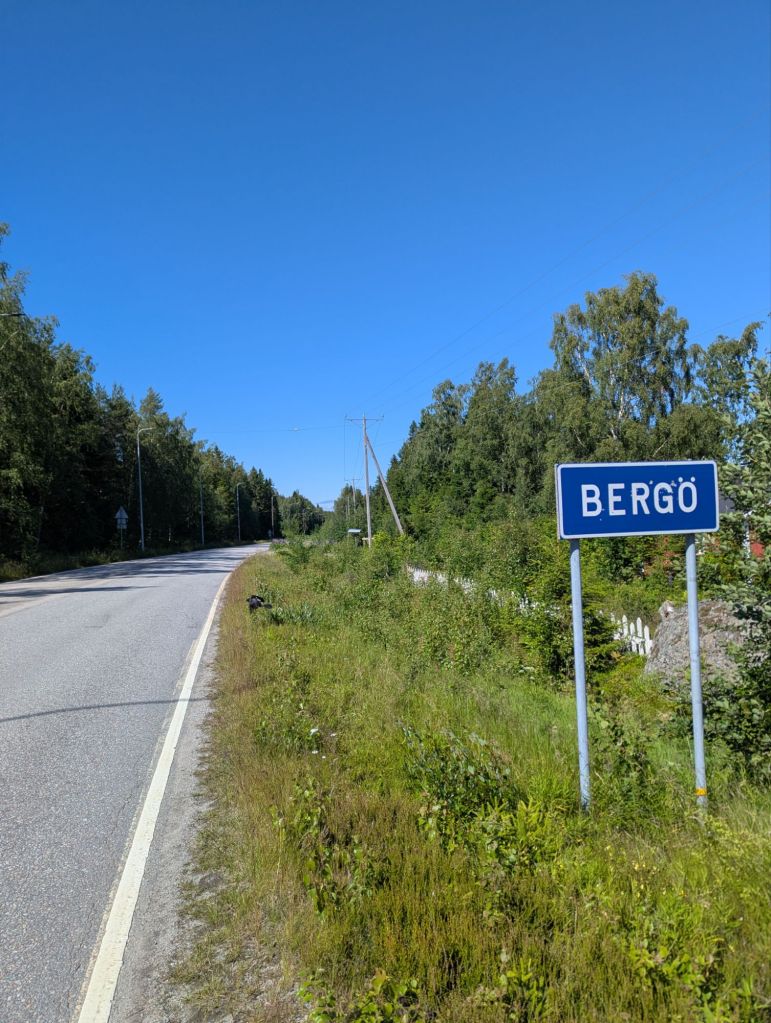
My instructions took me through the sleepy central village before turning off the ‘main road’ along a shaded dirt track, and it wasn’t long before I arrived at a detached wooden house nested in an opening in the trees. I half expected to be greeted by the blank expression of someone opening the door to a complete stranger, but that’s not what happened at all, far from it.
For the rest of that Friday and well into Saturday I was welcomed as a guest into this family as if they had been expecting me for years. First at Akiko and Bo-Henrik’s house (Maja’s parents), where within minutes I was on the sofa relaxing with a cup of tea, absorbing the homely surroundings I had found myself in. Don’t get me wrong I do love my tent, but there’s nothing quite like a house that has been a family’s home for decades, with all the furnishings, trinkets and paintings that accumulate over a lifetime. Akiko explained she was born in Nagasaki and still has family in Japan; the Japanese influence was all around, including the delicious sit down meal we ate together along with their well mannered granddaughters Kira and Stella.
I was invited to give the sauna a try, so Bo-Henrik led me across the garden to a conical wooden outbuilding and gave me some instructions. There was an emphasis on the importance of adding logs to the wood burning stove to maintain heat, and he explained that I can use the extra basin of water to have a wash whilst in the sauna. I’d never heard of washing in a sauna but it is quite therapeutic, especially if the temperature is running at c.100°C – normally that would be way too hot for me, but the trick seems to be: go easy on the steam and occasionally flop a wet flannel over your face.
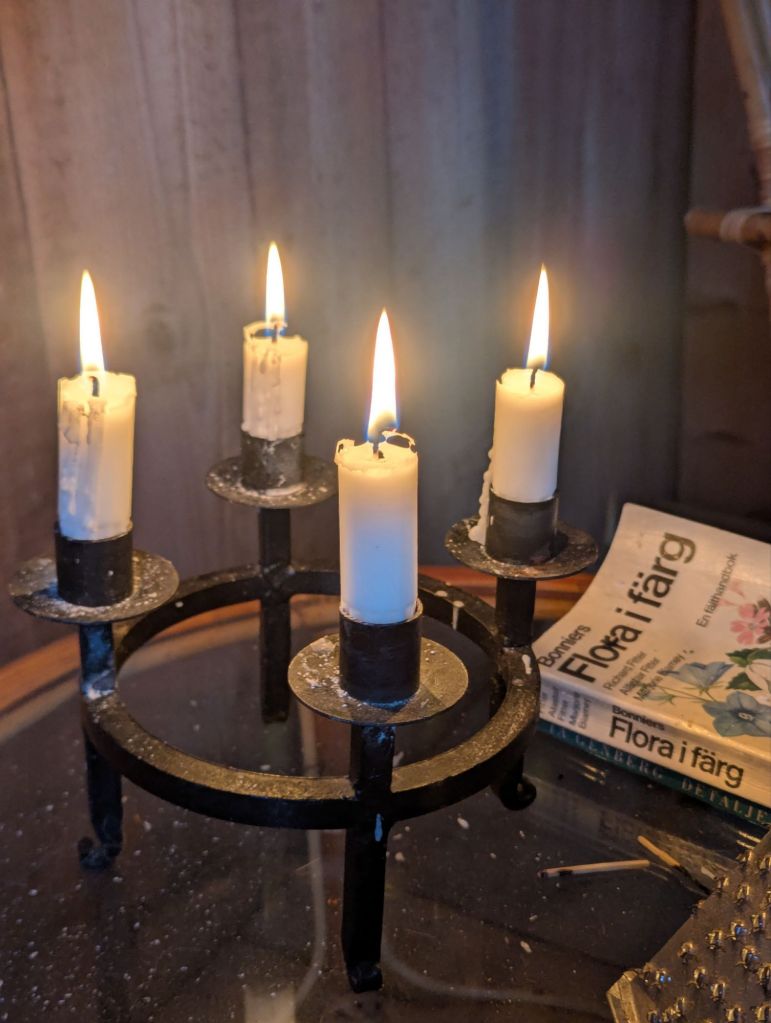
I was invited to a garden party at Maja’s sister Erica’s home the following lunchtime, where I could also camp for the evening on the lawn. Stella and Kira hopped on their less laden bicycles and led the way as we moved towards the island’s west coast. I didn’t even use the tent in the end, instead sleeping in what may be the cosiest wooden ‘shelter’ yet, more of a wooden summerhouse equipped with comfy seats and candelabras. I think I had taken over Greta the cat’s favourite hang out spot, but she didn’t seem to hold it against me.
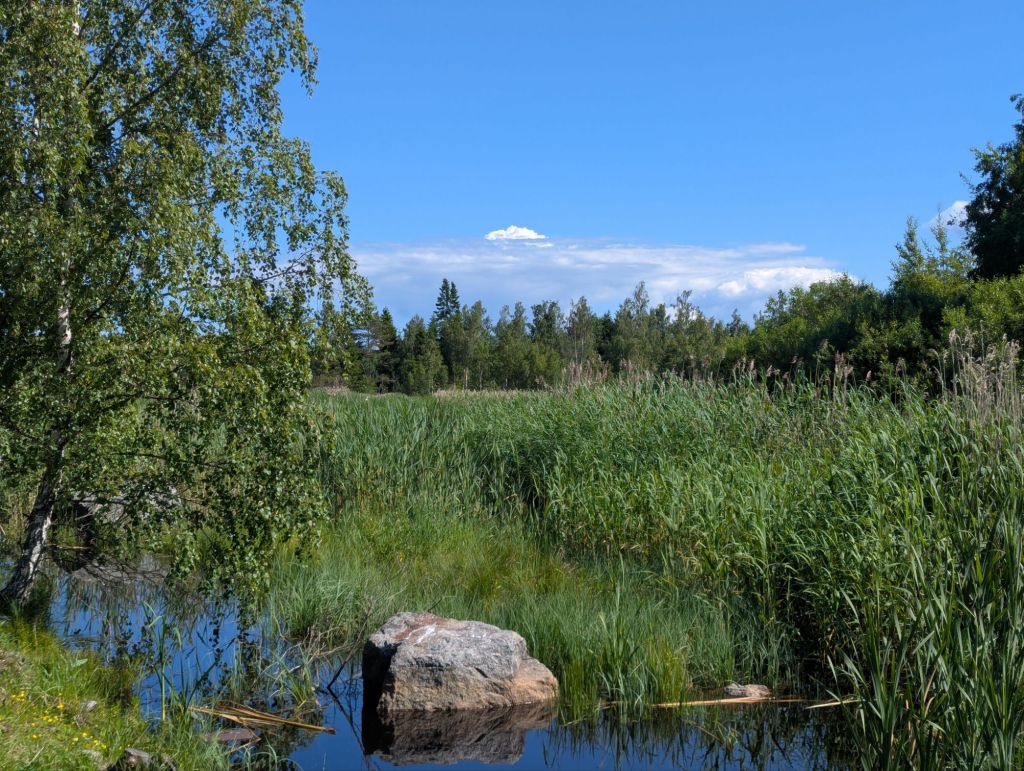
The next morning I had a wander down towards the local marina and bathing spot. Most of the buildings were painted in that iconically Swedish ‘Falun red’ paint that I’m told traces back to an abundance of cheap iron oxide byproducts from the copper mining industry, still just as popular today even with the original Falun mine now closed. As you approach the water’s edge the trees give way to lush beds of tall reeds that sway back and forth in the sea breeze, a perfect hiding place for bird life that wants to be heard but not seen.
Akiko and Bo-Henrik arrived, the food was served up and we feasted on the variety of offerings, including some of Stella’s own handiwork. Maja and her husband Tim even called by to say hello on their way to the unenviable task of chopping up a large pile of logs into firewood, albeit a job made slightly easier if you rent a semi-automatic chopping machine.
Moomin author Tove Jansson was a part of the Swedish speaking community in Finland. I have fond memories of the Moomins, albeit from watching the early 90s TV series that was produced in Japan and dubbed in English – there was something very calming about it all: the beautiful house, the natural surroundings, their soft rounded faces, but most of all their demeanor and how they treated each other, whether it be family, friend or stranger. Who knew that one day I would actually meet them.
Ostrocised
After saying my goodbyes and packing a punnet of very ripe strawberries into my handlebar bag (thanks Maja) I studied the map pondering my next move. Helsinki was mandatory because that’s where the ferry to Estonia departs, and I still wanted to see some of the Finnish Lakelands rather than simply follow the coastline, as tempting as that was after Bergö.
I had generally heard good things about the city of Tampere, so this became the new intermediate target. Upon setting foot (tyre?) on the mainland again I began to cycle broadly east towards the small city of Seinäjoki.
What surprised me was how flat Finland seemed to be. It was approaching Netherlands level flat in this agricultural corner of Ostrobothnia. Just to be clear, Ostrobothnia is a region of Finland which lies to the west of South Ostrobothnia, Central Ostrobothnia and North Ostrobothnia. Almost as unfathomable as splitting Northamptonshire into West Northamptonshire and North Northamptonshire, the latter being east of West Northamptonshire [N.B. feel free to take notes].
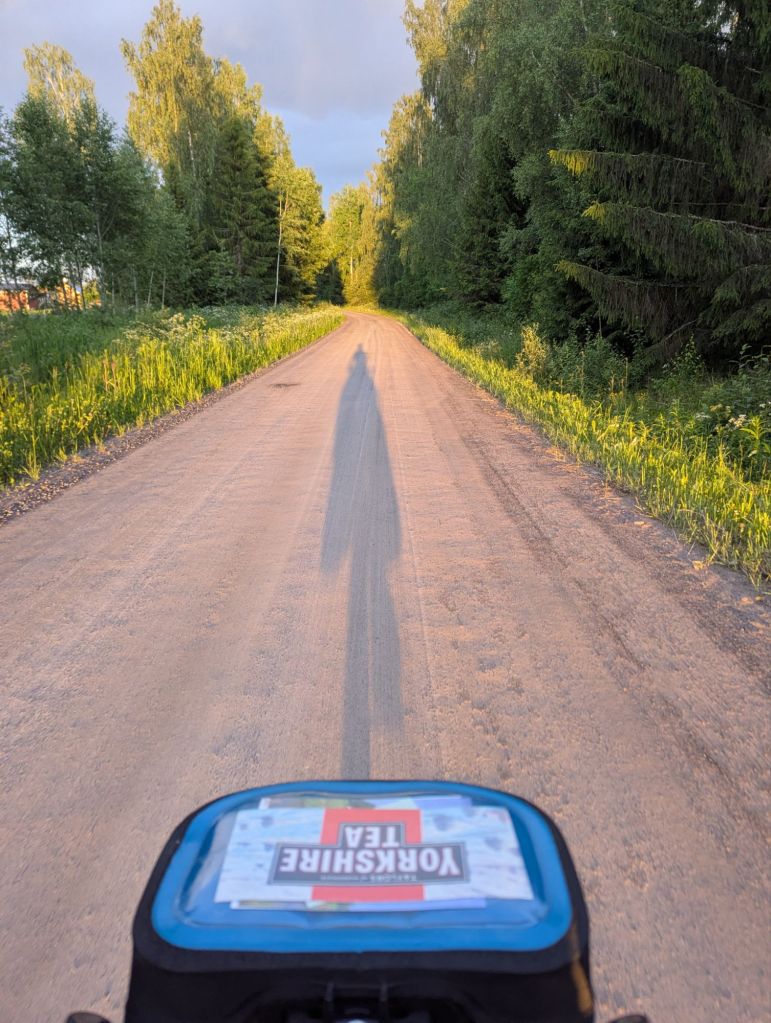
The roads were more gravelly than in Sweden, sometimes decaying into pebbles that would be more at home on someone’s driveway. The variable surface meant the riding was often quite tough going, despite the gentle gradients.
As I rode along my surroundings slowly oscillated between forest plantations and vast expanses of completely hedge-less farm fields. The absence of hedgerows dividing fields was one of the first things I noticed in the Dutch countryside and the theme has continued. I’m sure there are hedgerows in some parts of Europe, but I doubt to the extent you get in Britain, they really are a defining characteristic of our landscape. With so much of Britain’s countryside devoted to agriculture the hedgerows provide a critical network of habitat for wildlife, all while making what would otherwise be just a bunch of old fields look so distinctive and bucolic. Seriously, have a look the next time you hear someone describe something as bucolic and I bet you there’s a hedgerow in there, somewhere.

My first camping experience in Finland was beside a small manmade lake near to a church-run tea room that opens only on Sundays. The next day being Sunday, it was a good opportunity to have breakfast by the lake, pack up, then have second breakfast before setting off. I was around halfway from the coast to Seinäjoki at this point and made good progress that afternoon, treating myself to a coffee in the city centre, but by the time I was ready to leave and keep going the heavens opened and a strong rolled in; I took refuge in a nearby campsite, where I attempted to do laundry (the washing part is easy, but drying clothes in a tent when it’s 12°C and pissing down at night – not so much).
Deeper into the Finnish forest
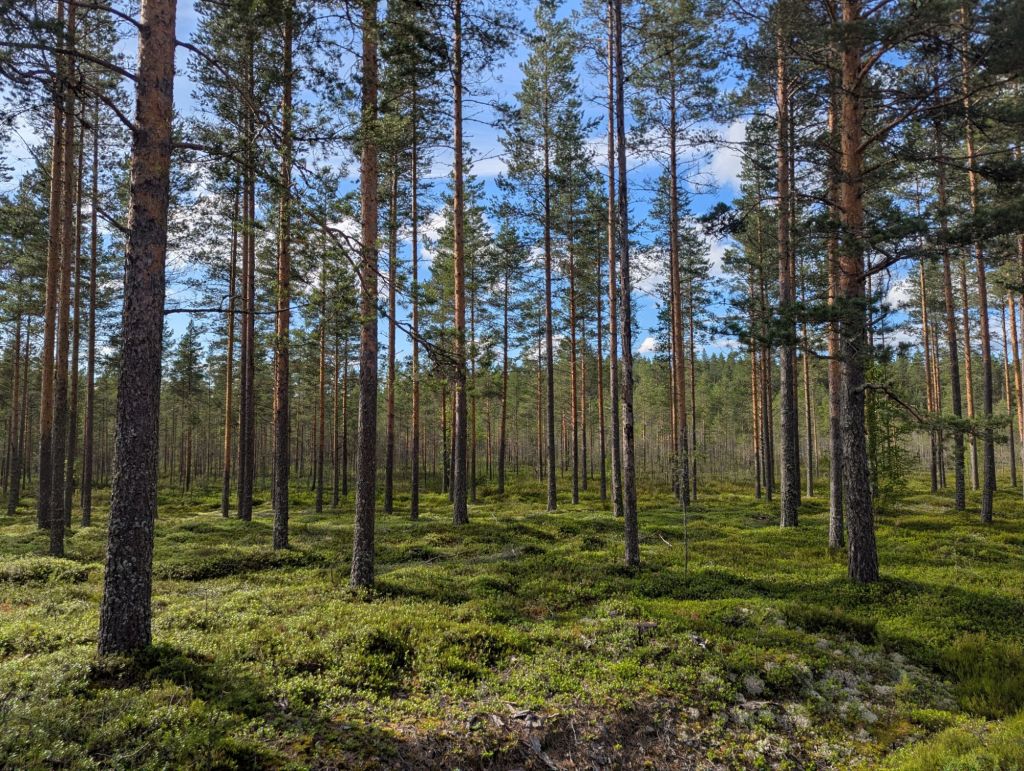
I was in awe of the volume of forests that carpet Sweden’s landscape, but Finland somehow has even more. Once you’re out of the agricultural areas heading inland you get that sense that Finland doesn’t just have forest, it is a forest.
From a cycle touring perspective, there are definitely some downsides to riding through vast swathes of Boreal forest. The trees block your view, and in a relatively flat country like Finland that can start to feel quite claustrophobic after a while, especially compared to somewhere like Norway where the towering buttresses of rock that surround you can be seen almost perpetually, constantly shape-shifting with the change in perspective as you make your way along the valley floor.
I would often find myself cycling along painfully long straight roads with endless trees on either side, the type of road where you lose all sense of perspective and feel like you’re stuck on an enormous treadmill. Then when you decide to take a short break, you might want to consider pushing on to the next town or village because I was hounded by more mosquitos in Finland than any other country I’ve been to…ever! In fairness this is partly my own doing: I didn’t use any bug repellent whatsoever, and wore shorts at all times on the bike (meaning I still had shorts on when I stopped to eat, wee, build my tent, etc.), rookie errors in a particularly wet Finnish summer.
But enough whining, the forest brings plenty of benefits too, not least a good barrier to protect you from the wind. There’s also a peacefulness about forests, the trees act as a natural sound barrier from noisy things like busy roads or construction sites, creating your own little soundscape bubble of birdsong, creaking tree trunks, and the whir of a bicycle transmission (if the latter closer resembles a squeal, please add lubricant).
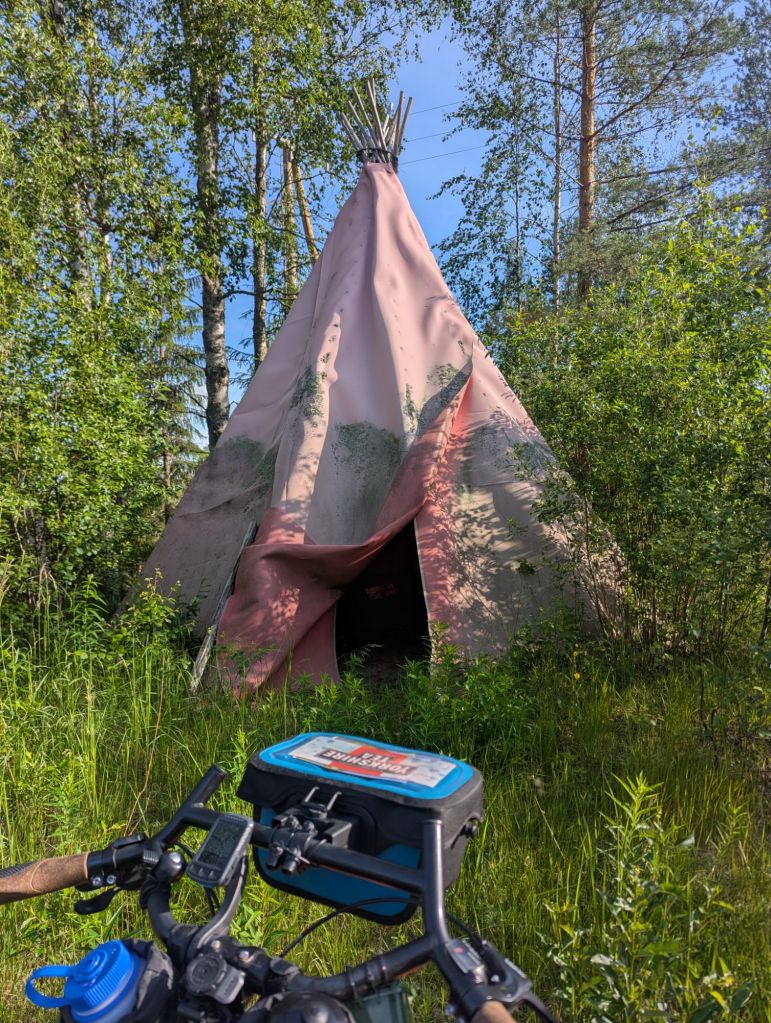
Keeping my eyes peeled for a good camping spot I noticed the pointed peak a pink conical construction poking out above the roadside shrubs not far from the town of Kihniö. It was a teepee: the frame was solid wood and the exterior a very sun-bleached canvas, it was a bit haggard but seemed sturdy enough.
The inside felt surprisingly cosy until I realised the mosquitos could get in. I tried to set up the flynet of my tent as a little room-within-a-room sanctuary, but the fireplace – a viscously sharp rusted wheel in the centre of the teepee – was threatening to slice my tent into pieces at any moment. I retreated to the patch of grass outside the front door.
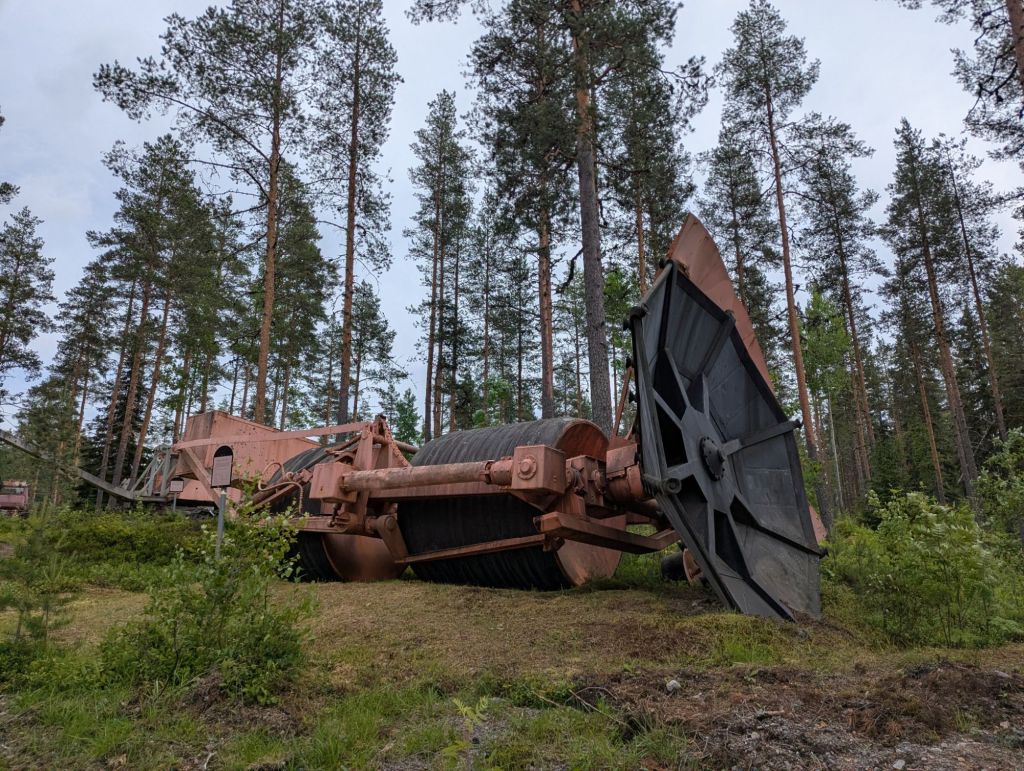
Continuing the theme of chancing upon quirky little cafés, I came across a museum dedicated to the history of the area’s peat industry. I don’t know when the museum was built but I get the sense they haven’t changed too much since then, except maybe adding the DVD player which I watched a cracking little video on. For many decades peat provided the main source of employment in the village, but not anymore. Peat became a major source of fuel in Finland following WW2 and the Finns came up with all sorts of weird and wonderful contraptions to extract it from the bogs. Although the Vapo Oy site at Kihniö is no longer in use, a lot of the old machines have been arranged in the woods as an open air exhibit with post apocalyptic vibes.
The Lakelands
I don’t recall there being a distinct boundary, but as I drifted further into the country and entered the Pirkanmaa region the terrain was no longer pan-flat like in the west. We’re not talking mountains here, or even big hills really, but the ground was undulating and it takes a good bite out of your average speed.
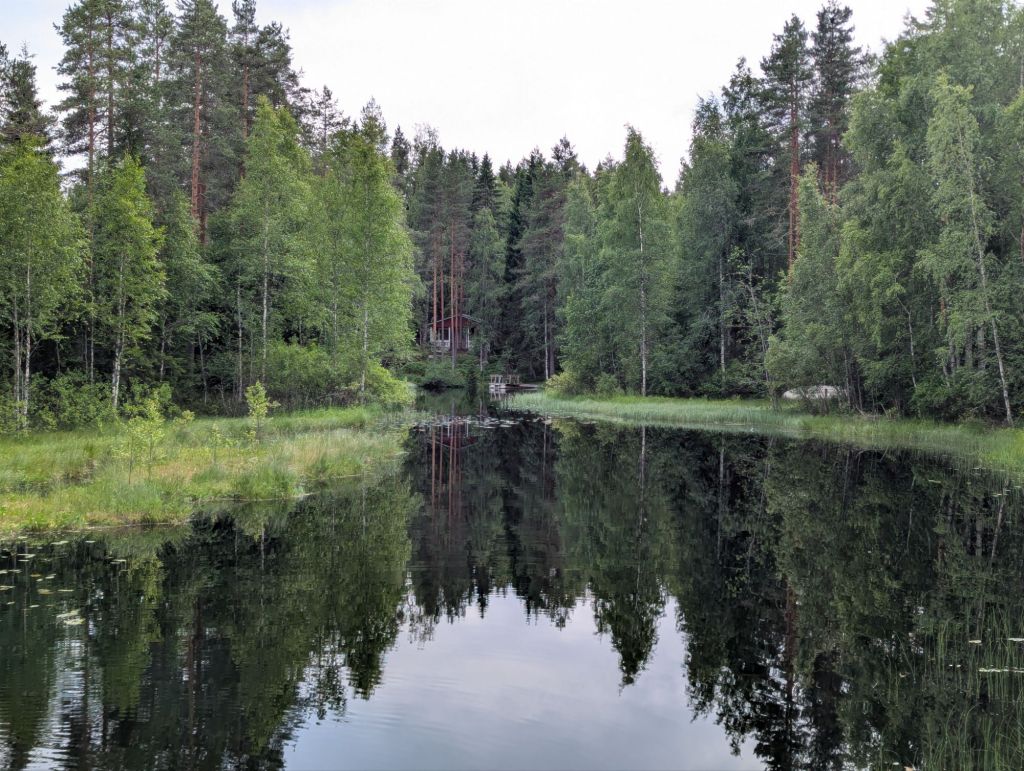
Finland is known as the land of a thousand lakes, but Wikipedia puts the total a whopping 180,000 including the small ones. If you got a job at 18 years old to wander around Finland taking photos of all the lakes, you’d have to average 17 a day if you want to retire at 65 (assuming you work a five day week with seven weeks holiday, if you were wondering). I photographed far fewer than 17, so I guess that means I failed the interview..
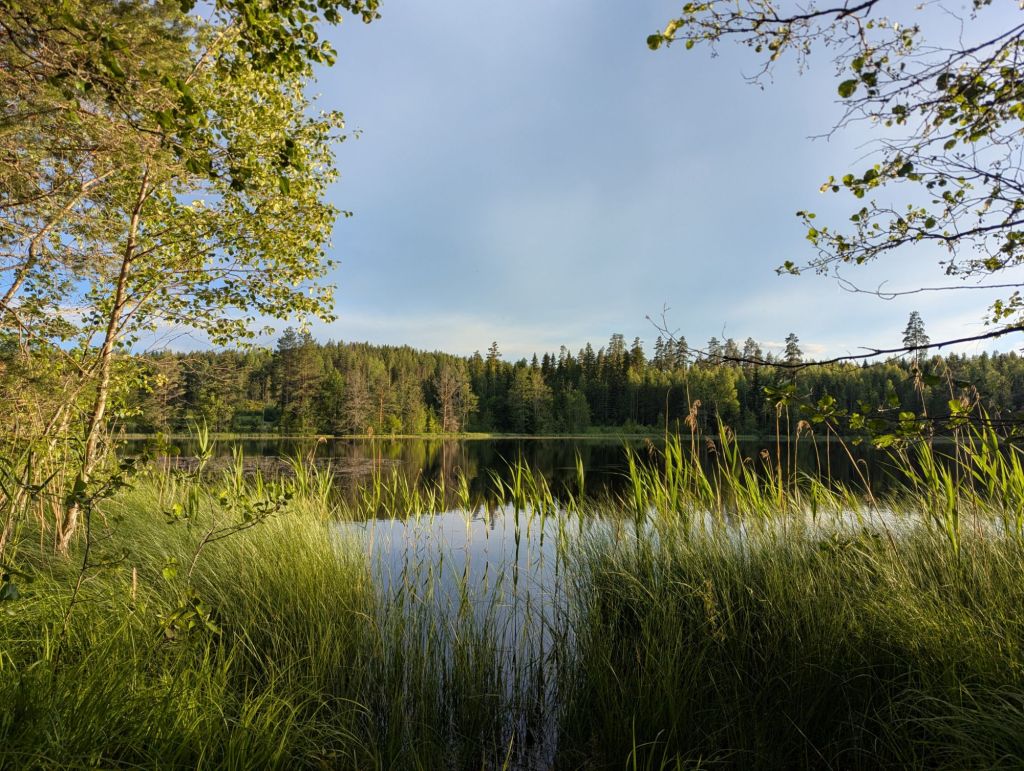
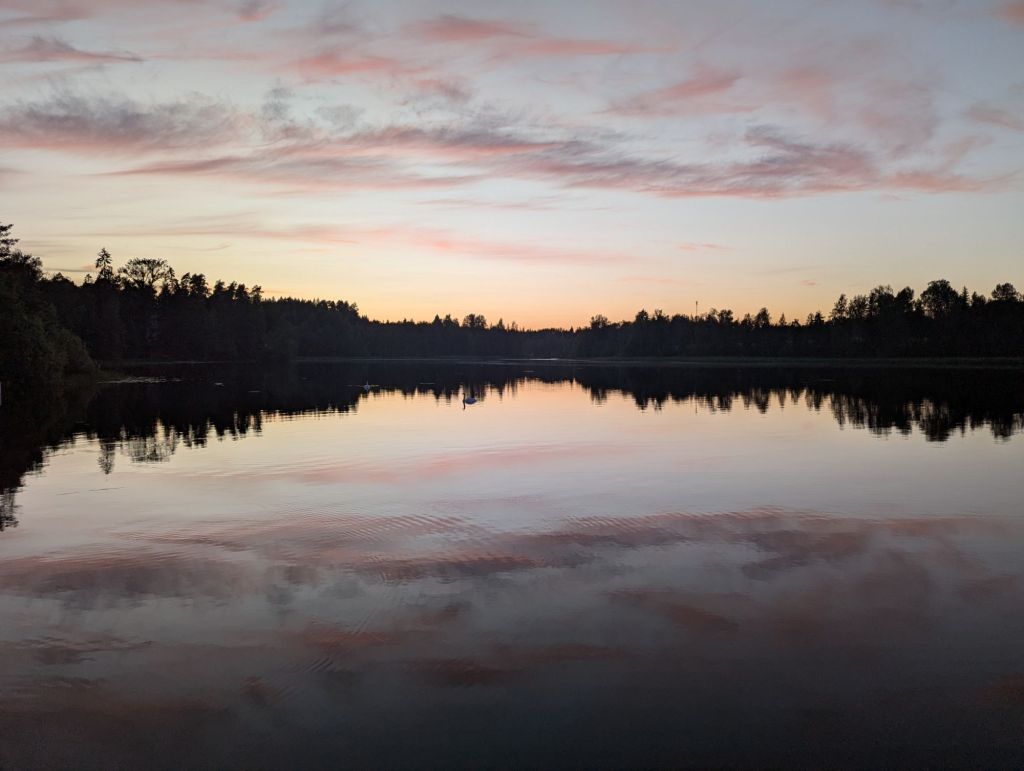
At one stage my plan was to take the steamboat from Virrat to Tampere along the fractal-esque body of water that intricately weaves its way from north to south. Forgetting I was no longer in Norway, where most ferries run all day every day, when I checked the timetable the next departure wasn’t due for another four days. Maybe next time eh?
Despite having relatively few lakes, one of the highlights of lakeland Finland was riding through the Seitseminen National Park. A bit like at Berge in Sweden you could see the forest was old growth, and it all just felt more like the proper wilderness. If I ever go back to Finland I would certainly prioritise riding through national parks; although you can’t just camp anywhere, the national parks have designated areas for tents that are well sign posted and probably guarantee a nice patch of flat grass to pitch the tent.
My final camp in Finland was beside the large lake that runs to Tampere. I’d spent part of the evening taking the rare opportunity to unwind on a sofa (under an alcove) that was part of the outdoor seating of a closed café, resisting the temptation to just lie down and sleep there. The conditions were perfect for the tent though, and the next morning’s ride into Tampere was an hour at most.
The escape plan
I mentioned earlier that my visa clock was ticking. Well that ticking was getting louder – I needed a plan to get out of the Schengen area before my 90 day allowance expired or risk a three year ban (and a fine). Now a three year ban isn’t exactly the end of the world, but I could do without the black mark against my name if it can be avoided. So what to do?
After much head scratching, map reading and journey planning, I concluded that trying to get to Istanbul over land was going to be more stress than I could handle. It would be an epic enough journey getting so many coaches and trains in a row just with a backpack – but with my fully loaded touring bike it was a recipe for pain. One missed connection and the whole thing falls apart if there’s no space for my bike on the next available departure.
So I booked a direct flight from Warsaw to Baku. I’ve never taken a bicycle on an aeroplane, so that was bound to be fun & games, but with twelve days before my flight Warsaw was well within comfortable reach, with a little help from public transport.
A tale of seven cities
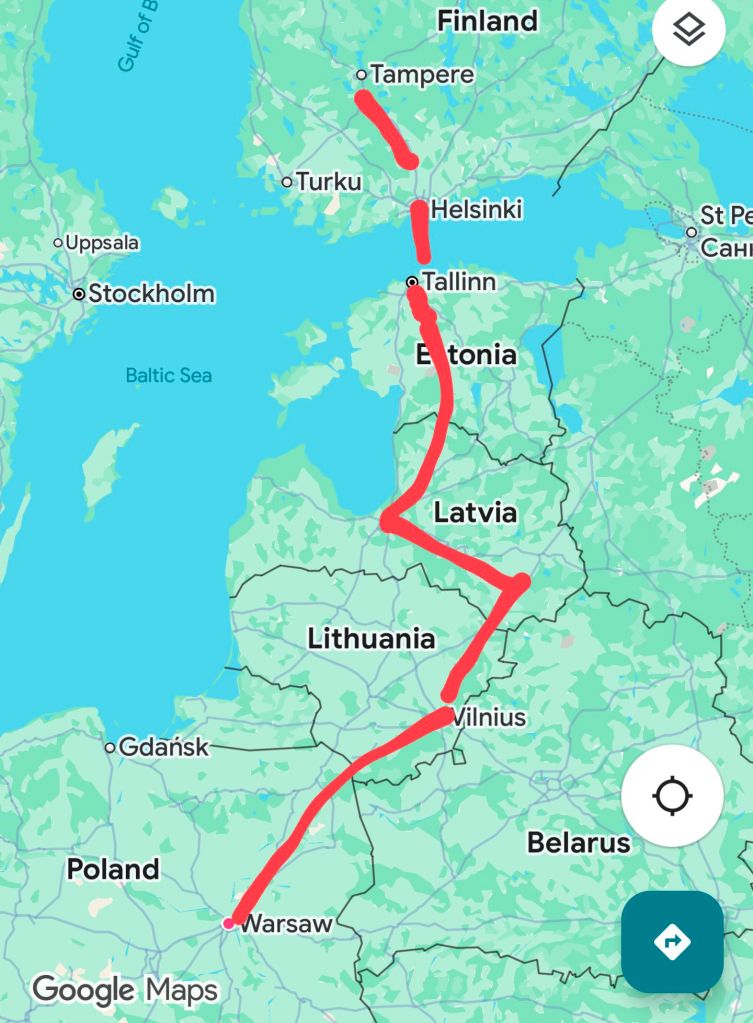
Tampere – TRAIN – Helsinki – FERRY – Tallinn – BUS – Riga – TRAIN – Daugavpils – CYCLED – Vilnius – BUS – Warsaw.
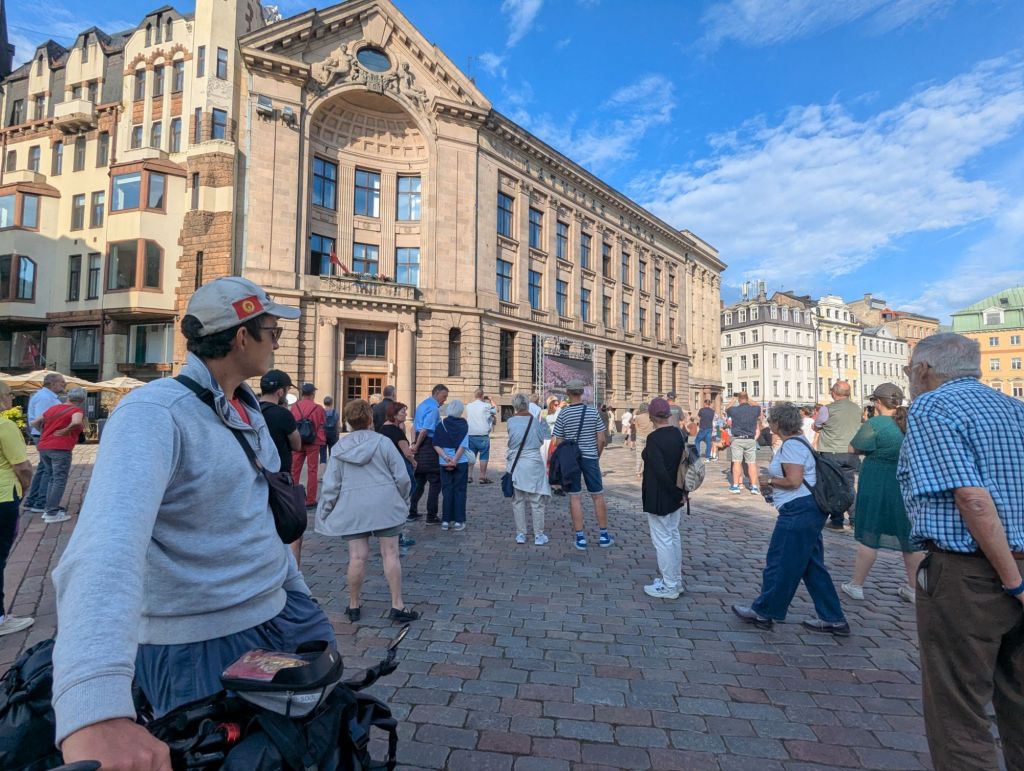
Not a great deal of cycling was achieved in the Baltics then. Those twelve days were a bit of a cultural bonanza, and quite a nice break for my body from all the cycling. Maybe one day I will find time to write about some of these cities in a bit more depth, they were certainly quite different from one another.
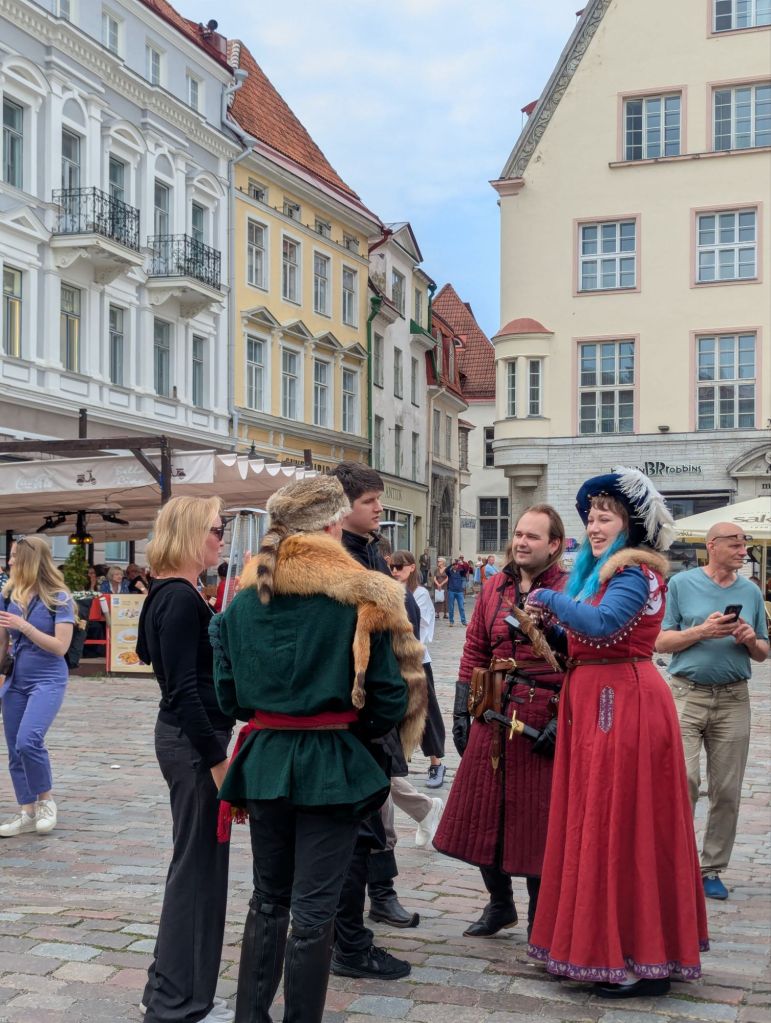
What I do want to mention is that I bumped into another British cycle tourist in the Helsinki-Tallinn ferry queue – Jake, from some village in the home counties – who I would end up meeting again on separate occasions in Riga and Vilnius. After being out of the UK for so long it was like a little taste of home, and I got plenty of tips from his experience of exploring the ‘stans’ in central Asia. Cheers mate, hope you manage to get out exploring again soon.
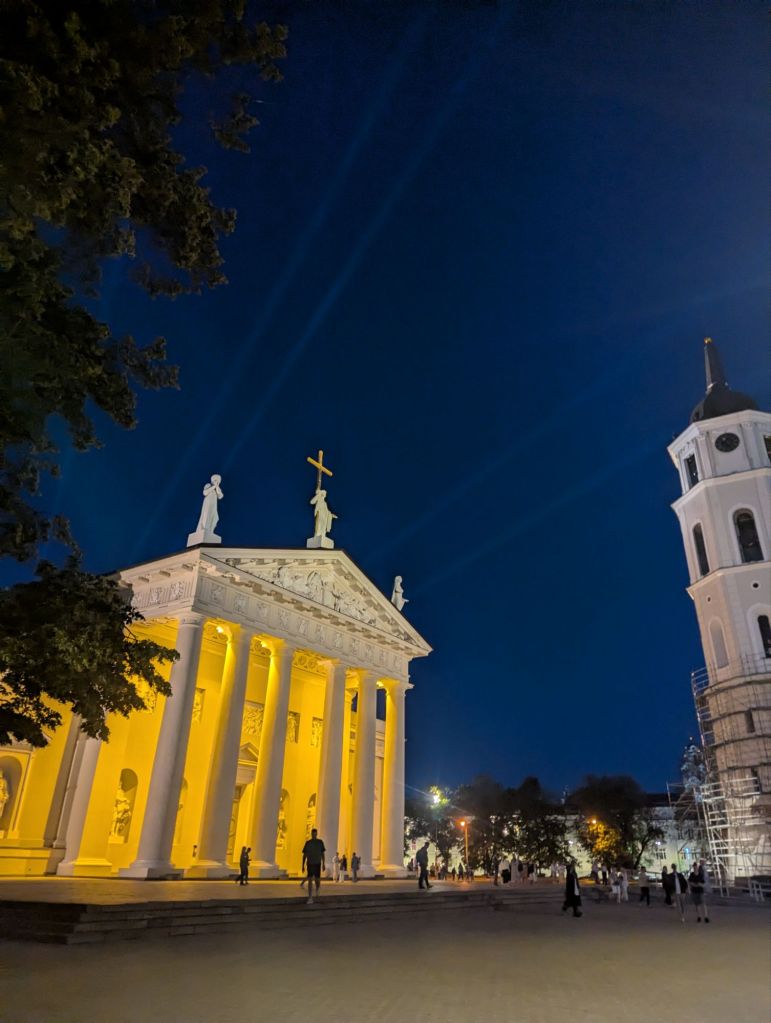
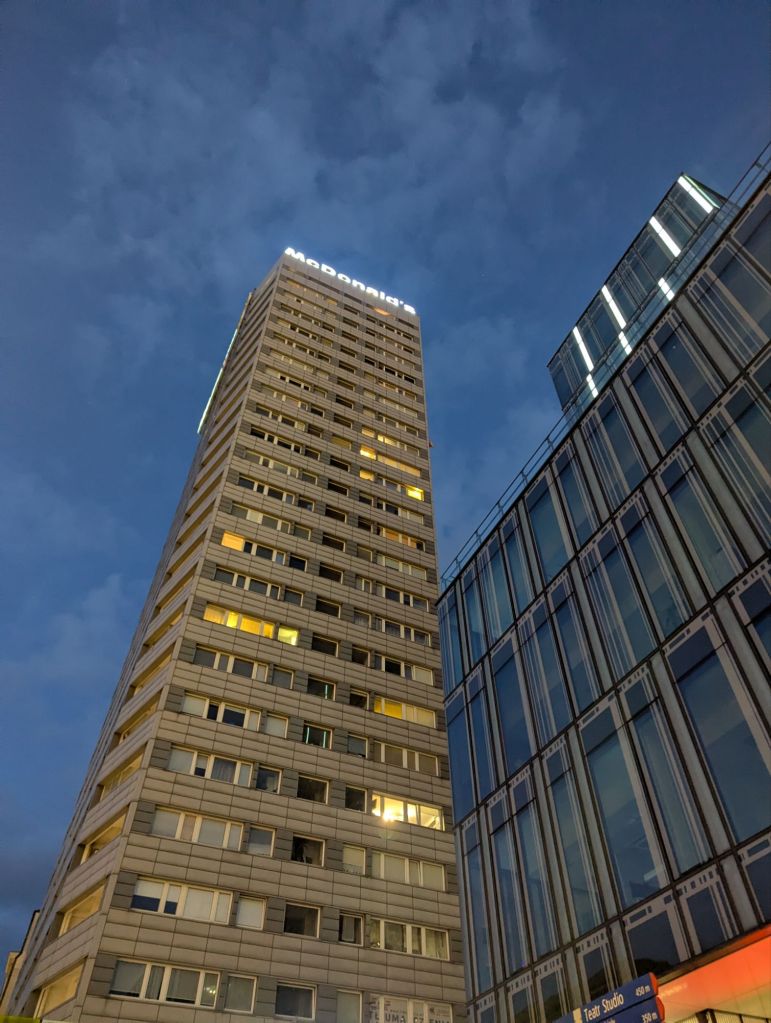
The final ride of Northern Europe – Daugavpils to Vilnius
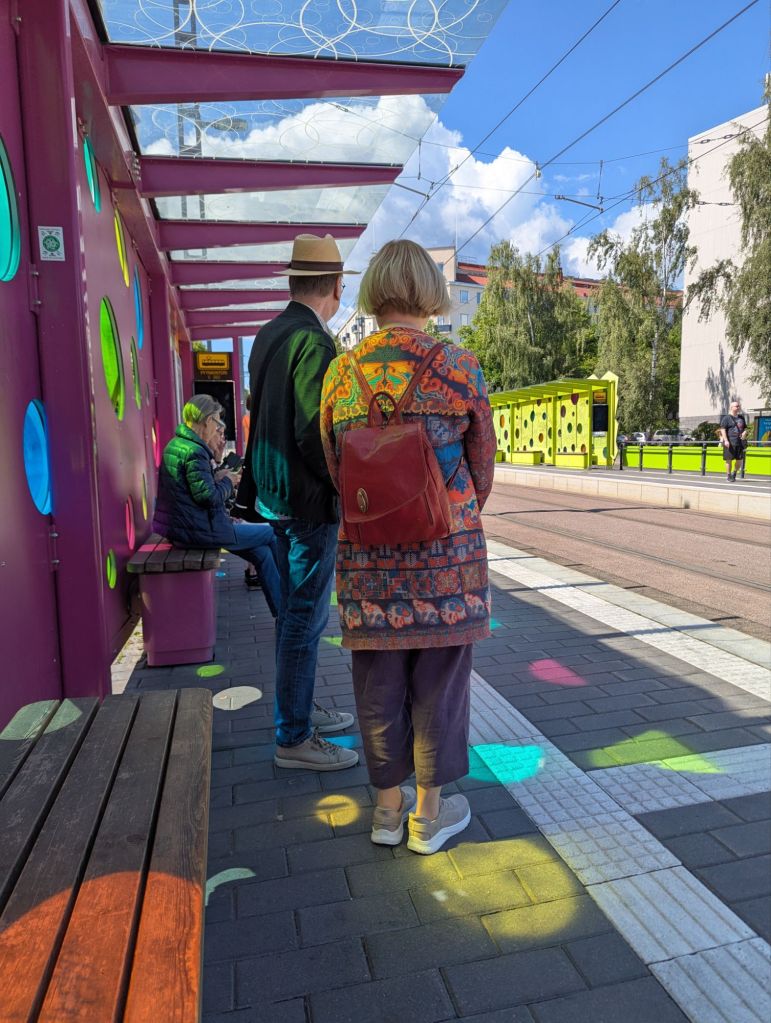
I did manage one decent ride in the Baltics, from Daugavpils in south eastern Latvia to the attractive capital of Lithuania, Vilnius.
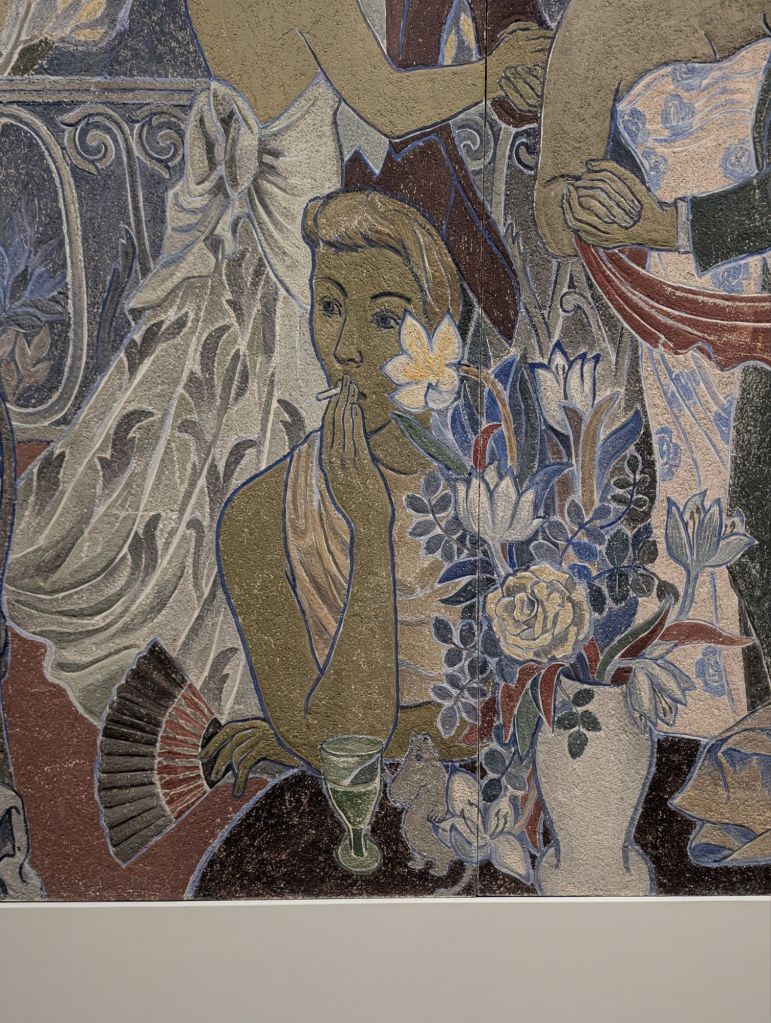
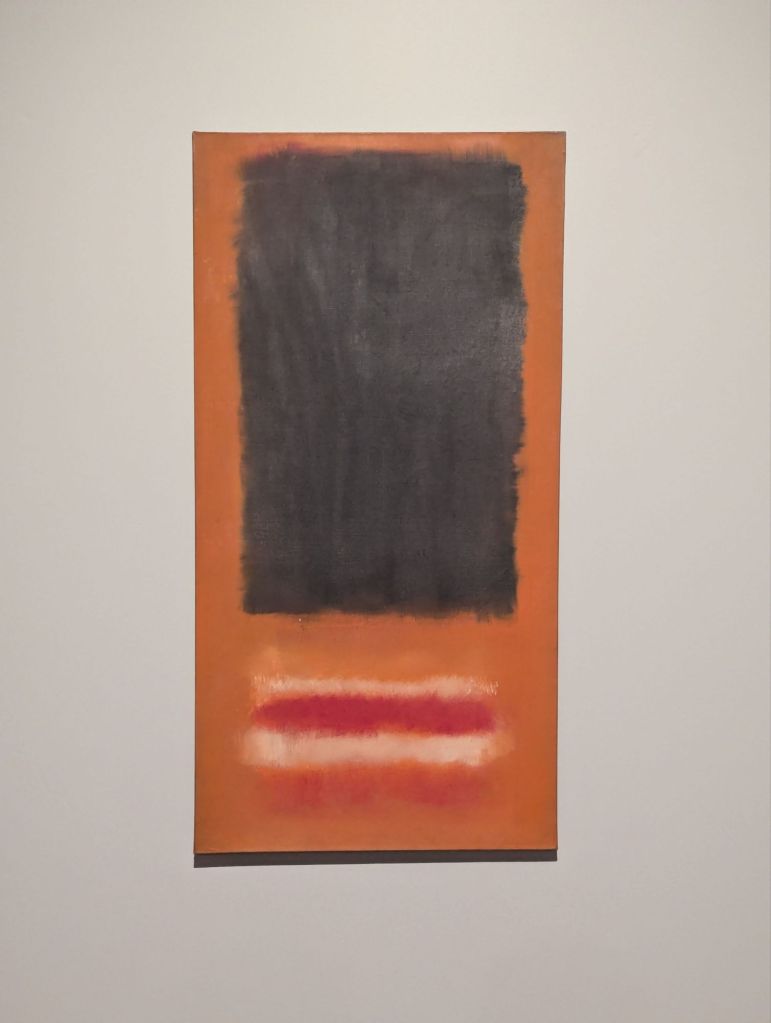
After a night in a cheap hotel in a less salubrious corner of Daugavpils I decided to give the city another chance and headed to the old fort complex where they house the Rothko museum. Rothko was born in Daugavpils before moving to the US at a young age, but they are clearly proud of the connection (a bit like Shrewsbury and Charles Darwin) and have managed to secure several original Rothko paintings and sketches on loan.
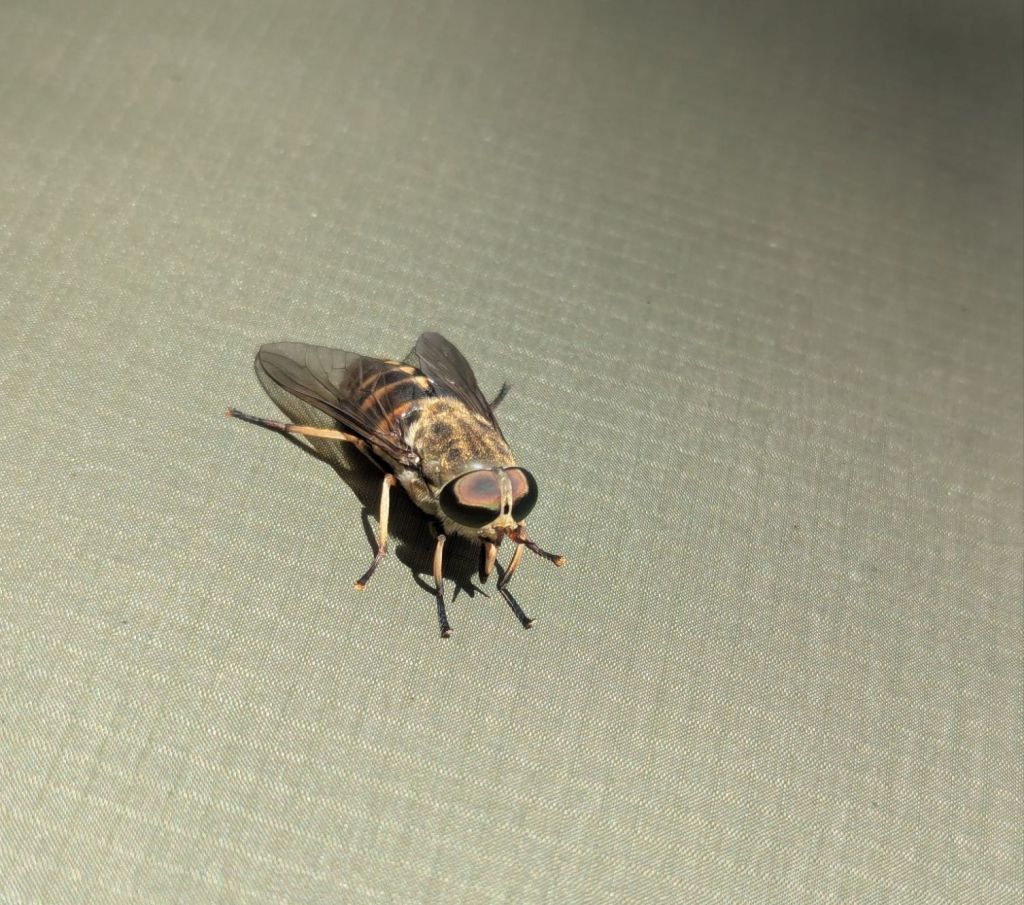
After getting in some shopping I didn’t set off until around 4pm. The road quickly turned to gravel and clouds of dust were thrown into the air with every passing car. The Lithuanian border is not very far from Daugavpils and I was soon across it, eventually reaching the small town of Visaginas where I got marooned at a Lidl waiting for the sudden downpour to ease off. I gave up on making good progress that day and camped in a nearby lake, where mosquitos there were many, as well as the biggest fly I’ve ever seen.
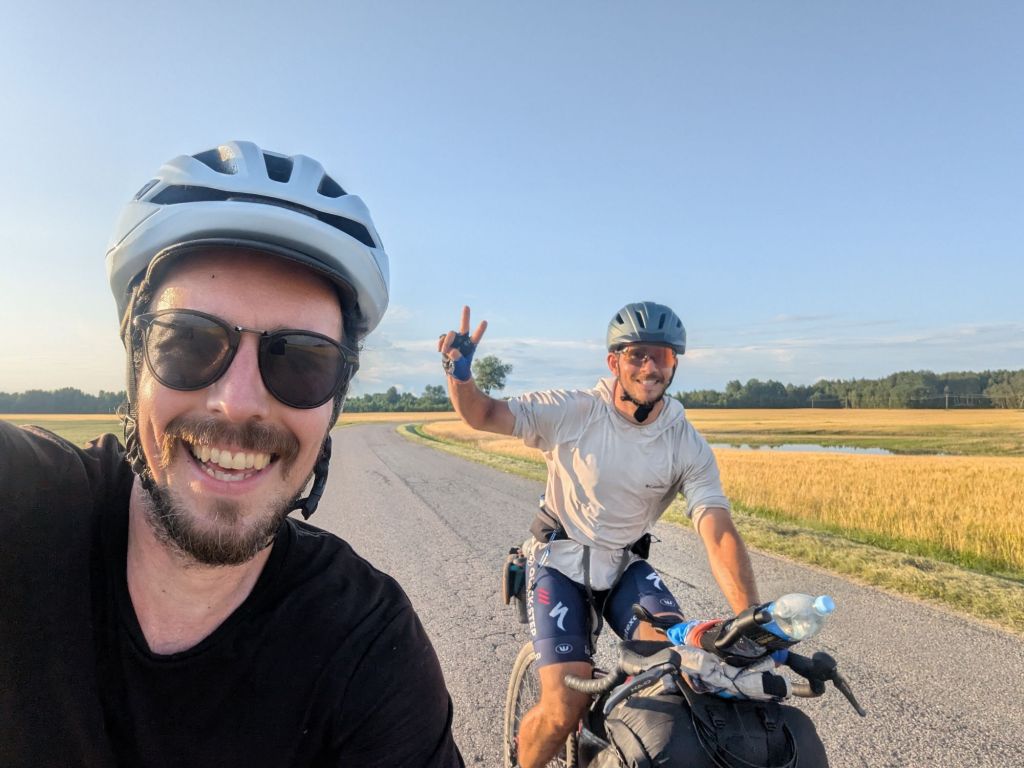
The weather was more settled the next day, and as I was riding along I passed another cyclist on the road who had stopped, giving the customary wave and hello as I passed. He was going the same direction as me and soon caught up. Nick is an Italian living in Copenhagen, and was celebrating the completion of his studies with a cycle touring adventure. We agreed it would be fun to continue riding together, so we headed for Vilnius.
Within about 15 minutes we passed through the small village of Naujasis Daugėliškis, where a group of ladies stood at the side of the road gesticulating at us to stop. They were wondering what brought us to this corner of Lithuania and were keen to understand what things they could do to bring more cyclists to the village.
We were happy to help, and with the promise of food we were led into a small community building opposite the village church, where we were plied with coffee, fruit and biscuits. We found ourselves sat around a large table which slowly filled up with more and more local people: we were attending the Lithuanian equivalent of a Parish Council meeting.
There was a flip board with a long list of agenda items, and of course everything was in Lithuanian including the discussions. It wasn’t clear whether they were talking about the cycling agenda item or not, but we tried our best to give them a few tips on attracting cyclists – water points, café, seating areas, all on Google maps – and managed to slip out of the meeting so we could eat our proper lunch and get back on the road. It really was one of the most unusual experiences I’ve had on a bicycle, and the people were so welcoming it really made our day. So thank you to the people of Naujasis Daugėliškis, good luck with the tourism push.
With perfect riding conditions we made a successful push for Vilnius, making my final ride in northern Europe the longest of them all, just shy of 160km (Nick clocked in at over 200km, a cracking effort on a tour). I almost ruined a good ride in the final few kilometres by catching my hand on a bolt when crossing a motorway bridge on the narrow footpath, but fortunately my gloves took the brunt and I escaped with just a graze.
Thanks Nick, it was great meeting you and good fun hanging out in Vilnius. Good luck getting to Istanbul and ciao for now.
And that was that. I got a bus from Vilnius to Warsaw, where I would have to work out how to get my bicycle and panniers into a flight ready form that is acceptable to both me and the airline, oh the joy..
—————————————
PHOTOGRAPHY: Finland & the Baltics


 The Cycling Brit
Leave a comment