
I crossed the Dutch border and entered the German state of Lower Saxony on the 30th of April. Why Lower Saxony is higher up than Saxony on the map I’m not sure, maybe they were rebelling against the ‘north bias’ emerging in 16th century European cartography – preferring to see the world from south-up – but I doubt it.
I was a little anxious about leaving behind the gold-standard Dutch cycling infrastructure and stepping into unknown German territory, but Deutsche Infrastruktur is generally pretty good and that extends to cycling. The majority of roads have a separate cycle path, but sometimes they are a little narrow and often shared with pedestrians, so you do have to be vigilant.
The sun was continuing to beat down and I made the rookie mistake of running out of water, so I kept my eyes out for a church with a graveyard. This is a top tip by the way if you’re ever running low, but you need one where the residents are fresh enough to be remembered by the living; nobody waters the flowers anymore at the weathered headstone of Hans Schmidt, B.1725 D.1802 (RIP). They say you die twice: once when you croak, and again when the last person who remembers you croaks – if your chosen graveyard is full of people from the latter then don’t bank on there being a tap for the mourners.

Die Campingplätze
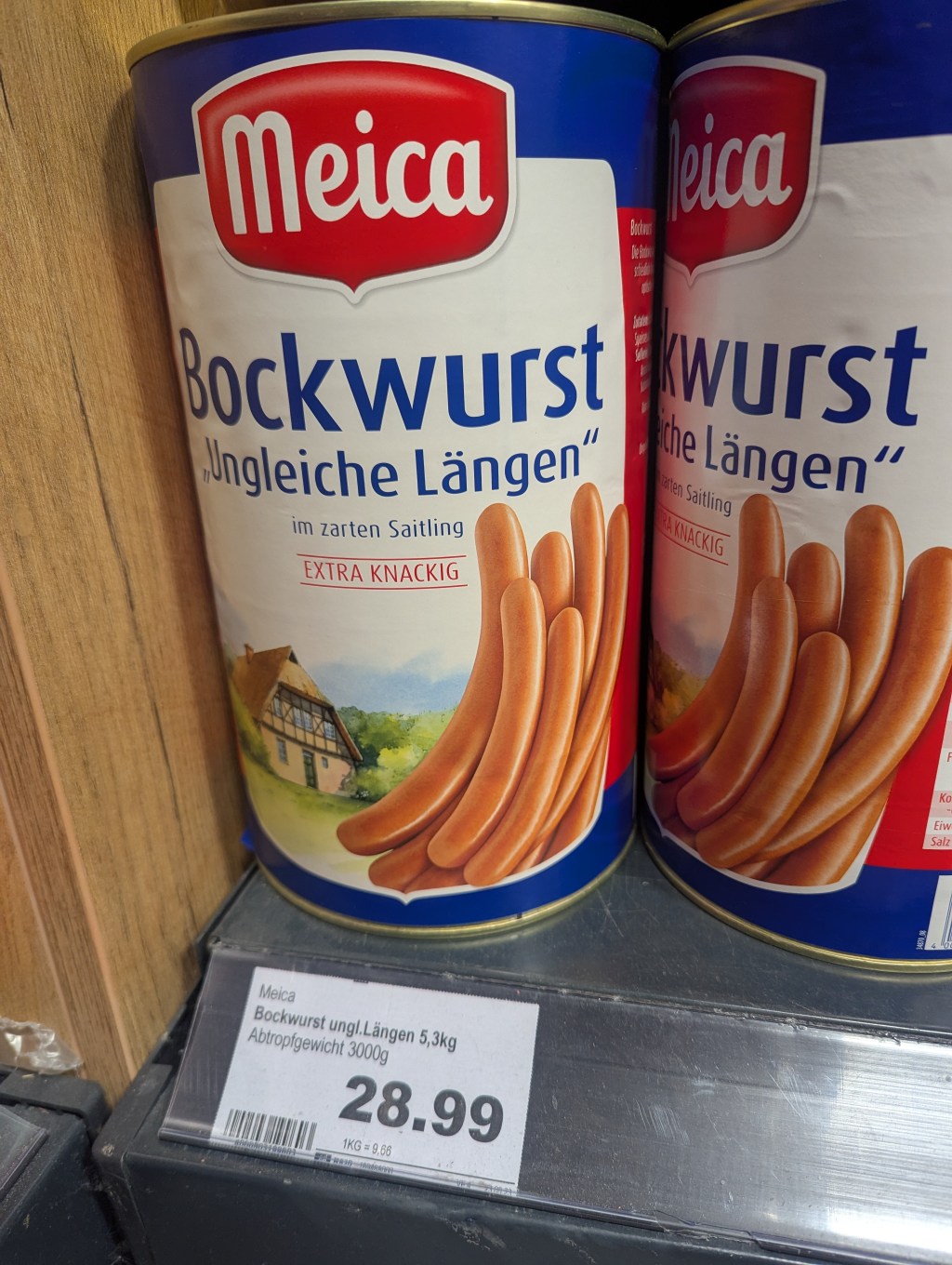
Fully watered but now running dangerously low on food, I tracked down an Edeka supermarket in the appropriately named town of Weener. Edeka is basically the Tesco of Germany, more choice than Lidl & Aldi and just about cheap enough to not turn your nose. I stocked up on groceries and made the inaugural use of my oversized bottle cages, which are the perfect size for a 1.5 litre bottle of pop…once finished you can either buy more pop or keep the bottle for extra water capacity.
There’s a campsite located on the outskirts of Weener, just beside the river Ems (which was hiding behind a dyke, as they all are in this region). Campingplatz Weener is a very German campsite, filled principally with static caravans owned by Germans, some of which looked like they had been there since the late 1970s, with little attempt made to scrape off the decades of moss and algal growth since their arrival.
The man on reception scribbled directions to the tent area on a paper map that appeared to be a photocopy of a photocopy of a photocopy. After some squinting and a few wrong turns I was greeted by my fellow campers: a friendly Dutch couple who were on a week-long trip, and a local man who had come out on his bike for a few days around the May Day bank holiday. I wondered if people who camp in tents and travel by car avoid Weener for some reason.
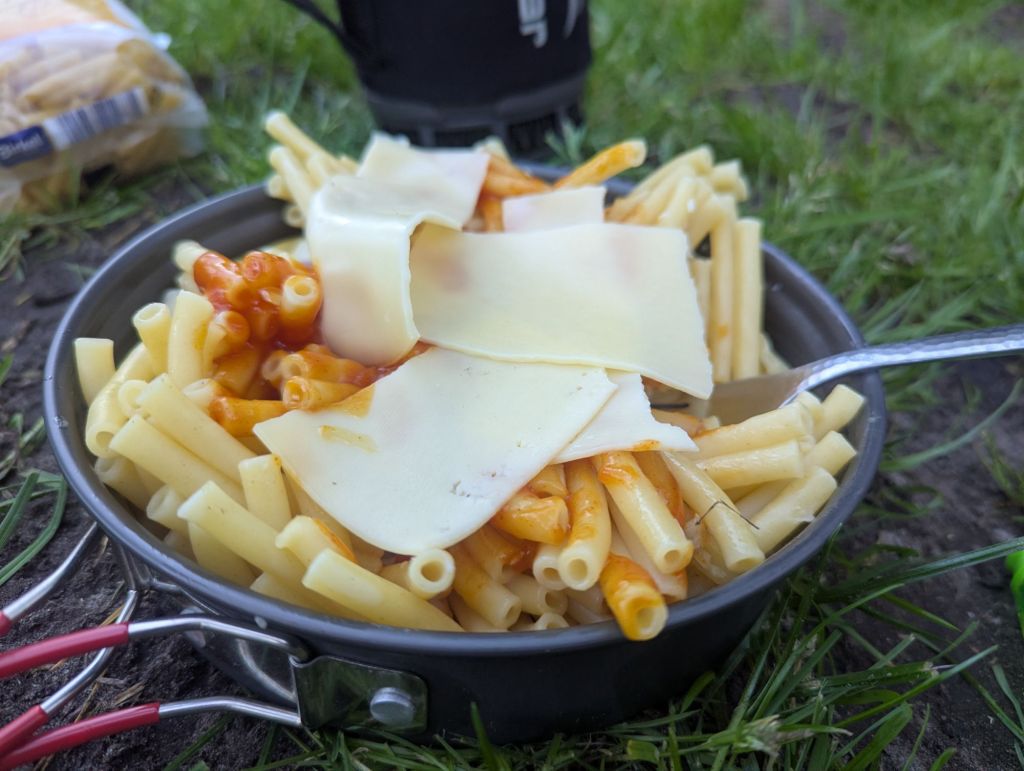
After almost ruining my evening meal by adding Bergkäse ‘mountain cheese’ that was way too strong for my delicate English palette, I handed the rest of the pack to my hardened cheese-eating Dutch neighbours. The Campingplatz Weener campers were all beginning to settle down for the evening.
At around 9:30pm, as the attractive dome shaped street lamps began to glow around the campsite, a new cyclist parked up at the edge of the grass and began to inspect the area for an optimum location for his tent, commentating a relentless stream of German as he did so. He was a stocky sort of fellow, around middle age with long wispy hair emanating from the patches where it still held on.
Until this moment I had thought of my own touring setup as being very much at the heavy end of the spectrum. Although the bike he rode in on was not itself too out of the ordinary – it had relatively small wheels with orange reflectors attached to every spoke, and an extra-wide seat upholstered with the sort of fluffy fabric you expect to find on a plush rug at Dunelm – it was the fact being towed along behind was a seriously hefty trailer. Most of the trailer’s contents were obscured by a blue tarp, but strapped on top was the silhouette of a large, oddly shaped object that was difficult to make out in the evening twilight: it looked like another bicycle, but surely nobody would tour with a spare bike? This man would, and does!
Our new camping neighbour unloaded his trailer, erected a solidly 5-man tent with high ceilings, and parked his main bicycle in the tent’s lobby. I have at times felt a bit eccentric in the planning and execution of this trip, but there are always bigger fish out there, and there is some comfort in that. From now on whenever I feel weighed down by the gravity of my luggage, I shall imagine if I were dragging along this touring setup, and feel the kilogrammes float away.
Campingplatz Weener had not only been quirky but it was quite cheap at €15 for two nights, half the price of the Dutch sites I had been staying in. The record for cheapest accommodation of the trip was to be short held however, with the title taken by Auecamp the very next day at a bargain busting €4, trustingly paid for via an honesty box. Despite being in the heart of Wildehauser Geest nature reserve, Aucamp is within earshot of Autobahn No. 1, so it would not be the quietest of night’s sleep. Another problem with cheap accommodation is feeling like you’ve now got spare budget to burn, which in this instance went into the onsite bar’s cash register.

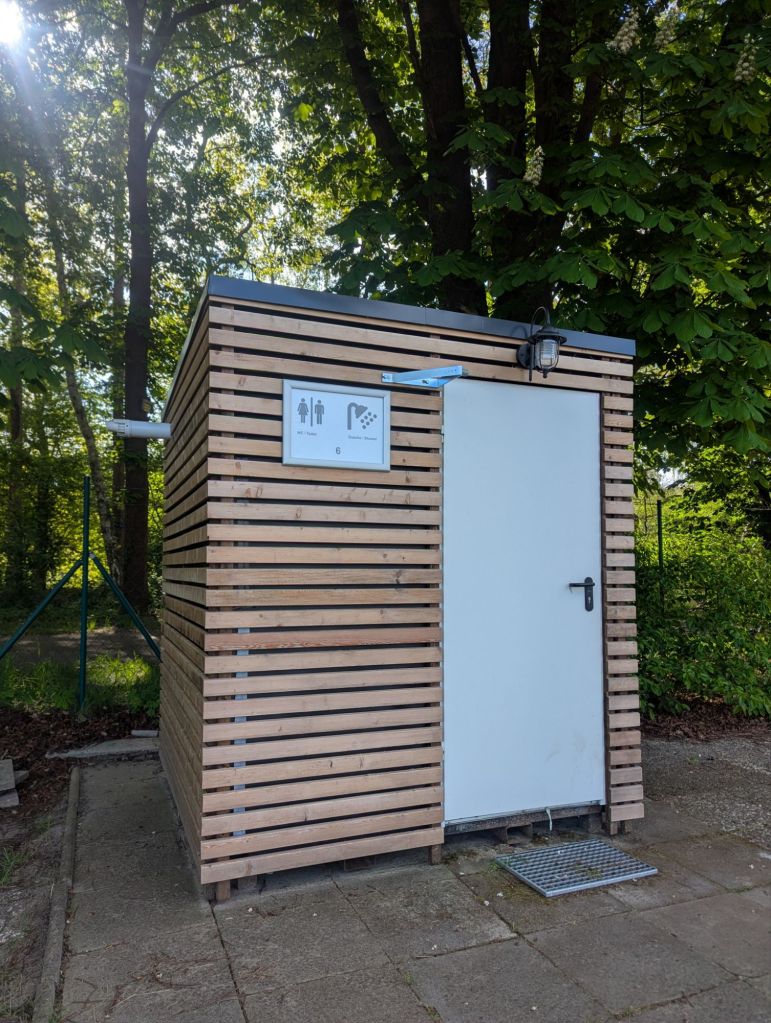
Now call me easily pleased, but you do start to appreciate good facilities when skipping from one place to another on tour. At Auecamp it was the immaculately clean, warm and well stocked toilet / shower cubes dotted around the site and required no token to operate – just step in, lock the door and it’s yours. After tiptoeing between patches of mud in the cold, dank men’s shower block at Weener, stepping into my own private shower booth was veering on decadence. I do not intend for this blog to be a running commentary on the good, the bad, and the ugly toilets of continental Europe, but these ones really did leave an impression! Maybe I am easily pleased.
Into the city
You spend a lot of time in the countryside on a cycle tour. Birdsong rings out from swaying trees, crops carpet the neverending patchwork of fields, and the sort of drama you might typically encounter is a farmer struggling to round up his more uncooperative livestock. It really is quite a peaceful place and you soon become accustomed to the gentle pace of country life.
So when I rolled into the city of Bremen and was met by hundreds of pro-Palestinian protesters marching through the main square, with a pro-Israeli counter-demonstration lingering on the periphery – everyone carefully watched over by armed German police – it was quite the sensory overload.

I had booked into my first hostel of the trip, two nights in the Meininger around 200m from the train station. It was one of those hostels that is essentially a hotel in every regard other than the fact you share a room, in my case with three other people. The facilities are great but there are limited opportunities to mingle with other travellers besides your roommates. Fortunately I was sharing with a fellow cyclist from Poland who had also not eaten yet, so we ventured into downtown Saturday night Bremen to replenish ourselves.
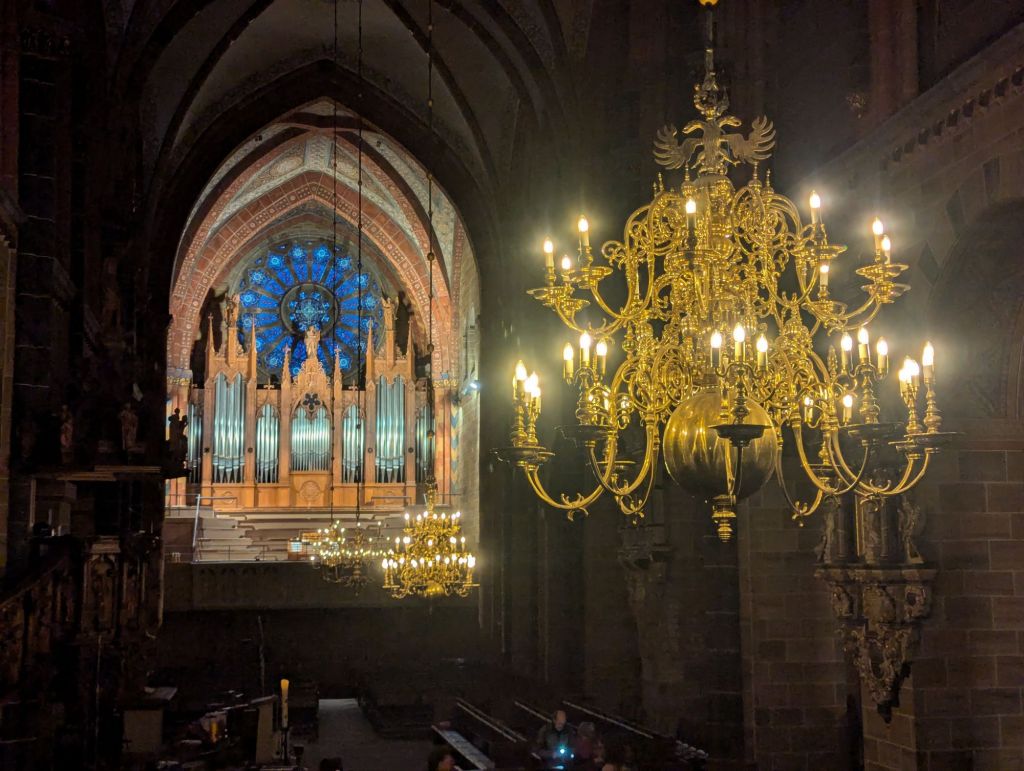
Cities may be chaotic and stressful, but they also have stuff going on. Take an evening walk into the centre of a provincial market town and you will be lucky to find a bar with a jukebox. In Bremen we wandered into the cathedral at 8:30pm and caught a live performance of some seriously experimental electronic music as part of the Lang Nacht der Musik event. Amid the soft overhead lighting and soaring gothic stonework, high frequency crackles & pops fizzed out over harsh mid-range synths, with the occasional deep bassline swooping out across the pews from a surprisingly small PA system. The performance wasn’t structured like classical music, it was closer to a Jackson Pollock painted in sound. You don’t get that in the countryside.
After our burritos we took the scenic route back to the hostel, taking in the handful of older buildings of Bremen that survived the allies’ WW2 bombing campaign. German city centres are lined with the glass and steel panels of generic modern buildings and you can’t help but wonder how they might differ today if some of those bombs were saved for military targets.
By Sunday morning Rafa and my two other roommates had moved on, so I had the place to myself, quite a rare treat in a hostel. I took the day to relax and do a bit of blog writing before heading for Hamburg in the morning.
I think it was when manoeuvring the fully loaded bike around the awkward hotel corridors that I noticed all was not right with my body. My lower back muscles had become tense, and certain actions – like lifting my leg over the frame to get onto the bike – resulted in acute pain. I rode out of Bremen hoping the pain would soon subside but it did not. I had to rest, so I headed for a small town called Worpswede which a man had recommended to me as a place to visit in the elevator as I returned from breakfast.
Worp speed ahead
Worpswede is not far from Bremen, but it seemed to take a lifetime to get there. I knew there were painkillers in my first aid kit but I couldn’t be bothered with the palaver of stopping to retrieve them, so I bit the bullet rode on.
If you had to pluck a small town out of thin air as a place to kill some time whilst feeling sorry for yourself, I can highly recommend Worpswede. It is a small town whose trajectory was forever changed by the arrival of artists in the 19th century. There are statues and public art pieces everywhere you look, and many of the houses are washed in colourful paint. I read a short history of the Worpswede artist colony and they remind me a little of the British Pre-Raphaelites: shunned by the mainstream art world, they decided to go their own way, with things getting a little bit incestuous amongst the small social circle of country-dwelling artists.
After taking some down time to eat cake and rest my aching muscles in a deckchair I had commandeered outside the Tourist Information centre, I necked a couple of Ibuprofen and hauled my arse back up to try and find some culture in this quite unusual place.

It was a Monday afternoon and the main art gallery was closed, so I decided to seek out an oddly shaped building I had spotted on a display board in Tourist Information – the Käseglocke.
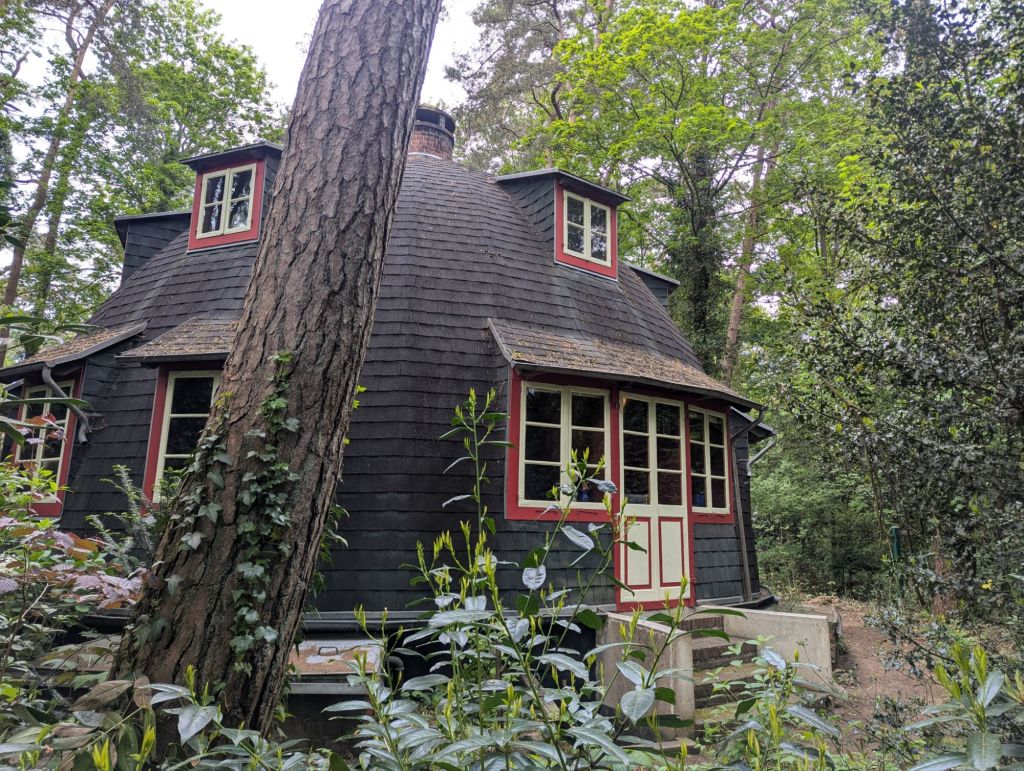
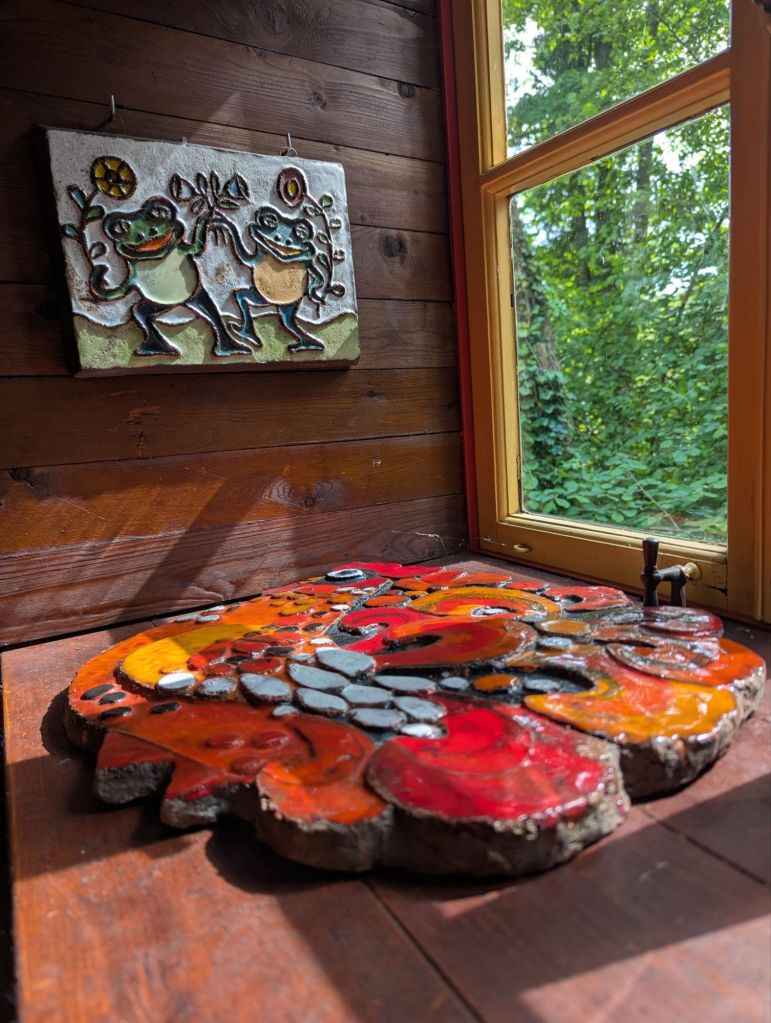
The Käseglocke, which translates to ‘cheese dome’, was built in the 1920s as the eccentric home for one of Worpswede’s resident artists. Apparently it wasn’t long before he opened up the quirky building for guided tours and that tradition continues to this day. There’s a wide variety of colourful ceramics, anti-ergonomic furniture (which you are allowed to sit in), and bizarre fixtures on displays, including a large stove built in the ‘Impressionist’ style. I can see why Impressionism took off more with oil paint than it did with stove manufacturing, but I like the idea.

Above the stove was a Kaffeeschacht: a Wallace & Gromit-esque hole in the ceiling to the master bedroom for the rapid retrieval of a freshly boiled pot of coffee. It really is a fun little building, filled with objects that give you a flavour of the unconventional artists who have lived in Worpswede over the years. It is set within some old growth woodland too for that extra fairytale vibe, and if you’re lucky some local ladies might turn up with a couple of donkeys in tow for a chat with the museum keeper.
Although it had been a challenging day with the onset of back pain I felt lucky to have spent it in somewhere like Worpswede. I headed to a riverside campsite to pitch my tent for an early night to maximise my recovery, the plan was to see how I felt in the morning and decide if I would carry on to Hamburg.
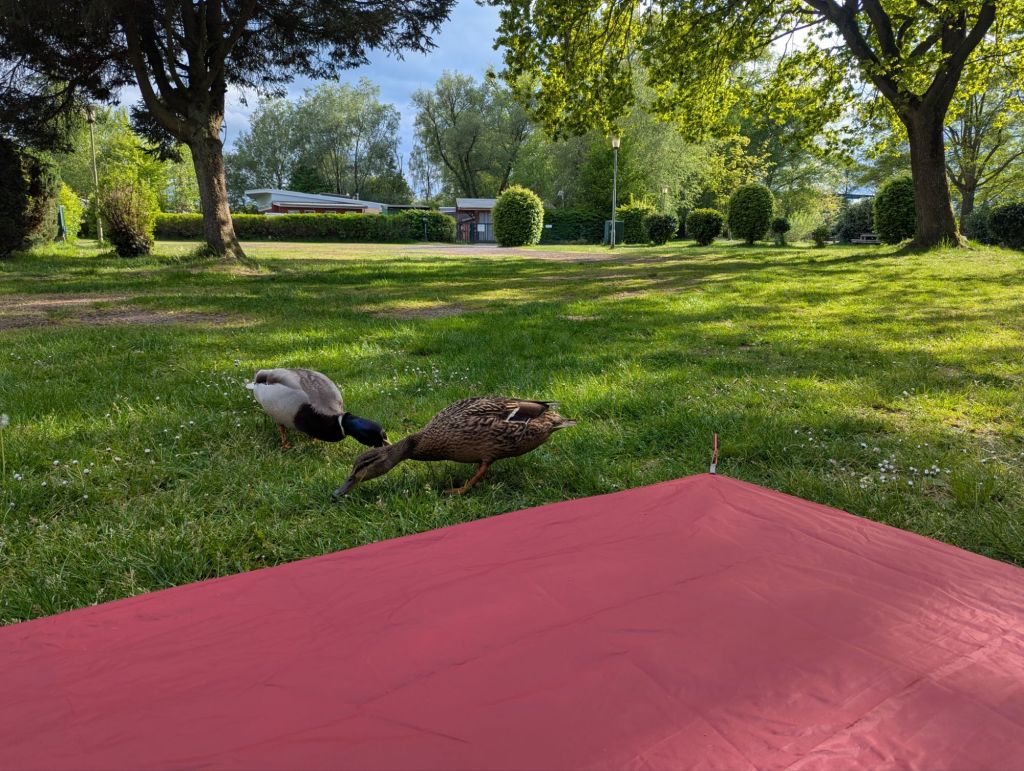
At the campsite I was greeted by two ducks: they had clearly been fed many times before by campers and hoped I might throw something tasty in their direction. But in my mind they saw a weary traveller who’d had a hard day and could do with some company, and that’s the version of reality I embraced.
PHOTOGRAPHY: Bremen & Lower Saxony
Strava: rides between 2nd & 5th of May
 The Cycling Brit
Leave a comment